
Xiaomi 17 Ultra Review: The Ultimate Camera Flagship of 2026?
With a 1-inch Leica camera, 200MP zoom system, flagship Snapdragon performance and massive battery life, the Xiaomi 17 Ultra aims to challenge every premium smartphone on the market.
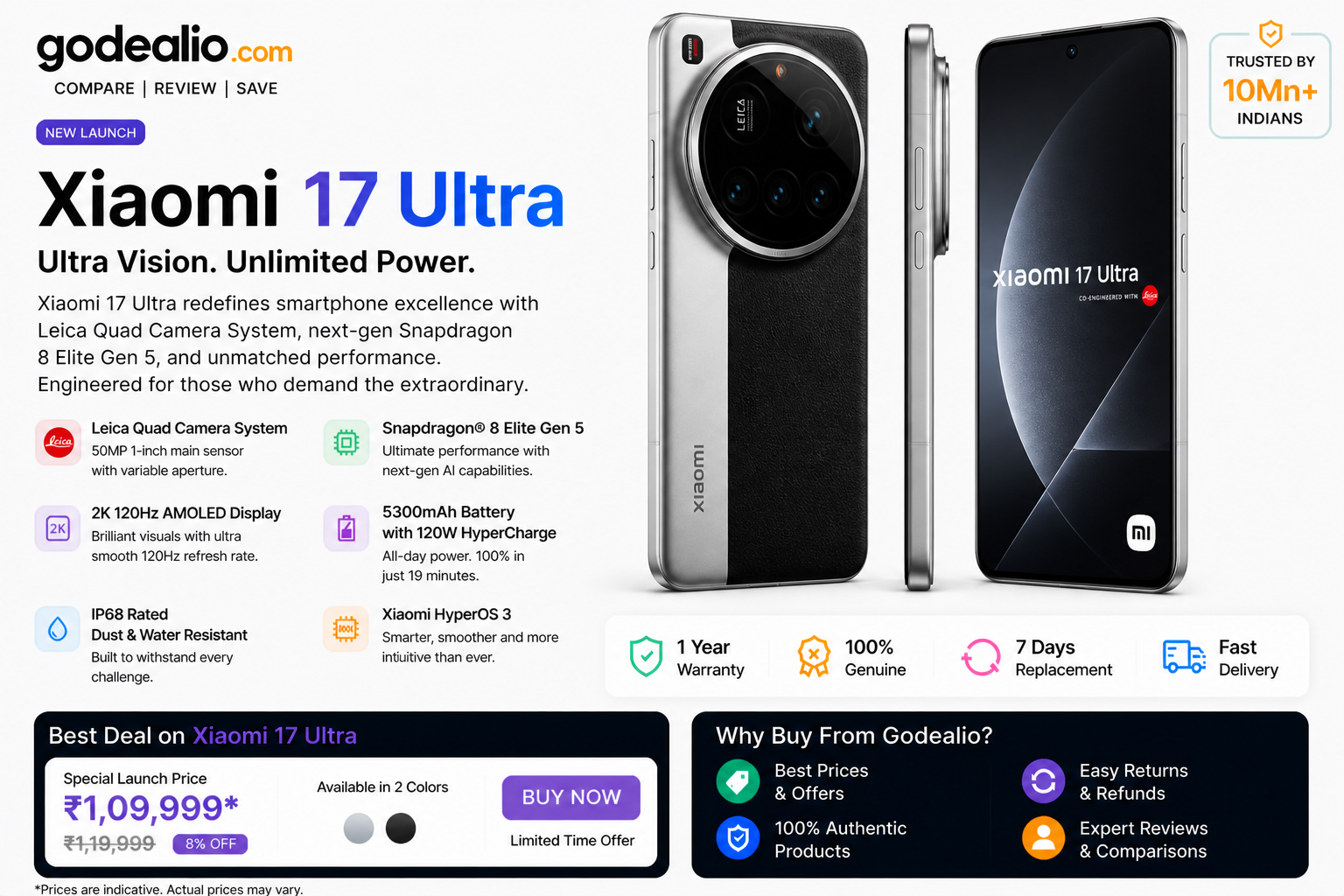
The Xiaomi 17 Ultra is one of the most complete Android flagships available in 2026. Combining Leica optics, a massive 1-inch primary sensor, a groundbreaking 200MP telephoto camera, Snapdragon 8 Elite Gen 5 performance and excellent battery life, Xiaomi has created a phone that directly challenges the Galaxy S26 Ultra and iPhone 17 Pro Max. While HyperOS may not appeal to everyone, the Xiaomi 17 Ultra delivers one of the best smartphone photography experiences available today.
Expert Review Notes
- Mobile photographers
- Content creators
- Android enthusiasts
- Travel photographers
- Users wanting flagship battery life
- Users who prefer smaller phones
- People heavily invested in Apple's ecosystem
- Buyers looking for budget devices
Review Score Breakdown
Pros
- The Xiaomi 17 Ultra is one of the most complete Android flagships available in 2026. Combining Leica optics, a massive 1-inch primary sensor, a ground
- Core specifications and practical benefits are covered in the review
- Provides an additional buying option in its category
Cons
- Final value depends on current pricing and competing products
- Real-world performance may vary by usage, software and variant
Design & Build Quality
The Xiaomi 17 Ultra immediately feels premium. Xiaomi continues its camera-centric design philosophy with a large circular Leica camera module that dominates the rear panel.
The titanium frame, premium glass construction and refined ergonomics make the phone feel every bit as premium as Apple's and Samsung's flagship offerings.
IP68 certification provides protection against dust and water, while the improved anti-reflective coating helps maintain visibility outdoors.
Display: One of the Best AMOLED Panels Available
The 6.9-inch LTPO AMOLED display is stunning. Colors are vibrant, blacks are deep and HDR content looks exceptional.
Peak brightness exceeds most flagship competitors, making outdoor visibility excellent even under direct sunlight.
The adaptive 1Hz-120Hz refresh rate keeps scrolling fluid while maximizing battery efficiency.
Performance: Snapdragon Powerhouse
Powered by Qualcomm's Snapdragon 8 Elite Gen 5 chipset and paired with up to 16GB RAM, the Xiaomi 17 Ultra handles every workload effortlessly.
Gaming performance is exceptional. BGMI, Call of Duty Mobile, Genshin Impact and Wuthering Waves run at maximum settings without noticeable throttling.
Improved cooling allows the phone to sustain flagship performance for longer than many competing devices.
Camera Review: Leica Magic Meets Modern Hardware
The Xiaomi 17 Ultra's biggest strength is undoubtedly its camera system.
The 1-inch Leica primary sensor captures extraordinary detail, natural colors and excellent dynamic range in nearly every lighting condition.
The 200MP telephoto camera is one of the most impressive zoom systems available on any smartphone today.
Leica color tuning remains a major differentiator. Users can choose between Leica Authentic and Leica Vibrant modes depending on their preferred look.
Portrait photography is among the best in the industry, producing natural background blur and realistic skin tones.
Zoom Photography: Industry-Leading Performance
The 200MP telephoto camera enables exceptional zoom quality across multiple focal lengths.
Photos remain detailed even at higher zoom levels where many competitors begin to struggle.
Wildlife, sports and travel photographers will particularly appreciate the versatility offered by Xiaomi's zoom system.
Video Recording
The Xiaomi 17 Ultra supports 8K recording, Dolby Vision video and advanced stabilization modes.
Video quality is excellent, with impressive dynamic range and detail.
While Apple's iPhone 17 Pro Max still maintains a slight lead for professional video creators, Xiaomi has narrowed the gap considerably.
Battery Life & Charging
The 6000mAh battery delivers outstanding endurance and comfortably lasts a full day of heavy use.
90W wired charging remains among the fastest in the flagship segment.
50W wireless charging is significantly faster than most competitors, including Apple's latest flagship.
Software & AI Features
HyperOS 3 feels faster and more refined than previous Xiaomi software releases.
AI-powered photo editing, intelligent search, writing assistance and productivity tools are integrated throughout the system.
While Samsung's Galaxy AI ecosystem remains more mature, Xiaomi's AI experience has improved significantly.
How It Compares To Rivals
Final Verdict
The Xiaomi 17 Ultra is one of the strongest Android flagships available in 2026.
Its combination of Leica photography, exceptional zoom performance, flagship hardware and long battery life make it an easy recommendation for photography enthusiasts.
If camera quality is your highest priority, the Xiaomi 17 Ultra belongs at the very top of your shortlist.
Final Verdict
The Xiaomi 17 Ultra combines some of the best camera hardware, battery life and flagship performance available in 2026. For photography enthusiasts, it is one of the easiest flagship recommendations of the year.
FAQs
Is Xiaomi 17 Ultra the best camera phone of 2026?
It is widely considered one of the best camera phones available, especially for photography and zoom performance.
Is Xiaomi 17 Ultra better than Galaxy S26 Ultra?
For photography, battery life and charging, Xiaomi has an advantage. Samsung remains stronger in software ecosystem and productivity features.
How good is the zoom camera?
The 200MP telephoto camera is among the most impressive zoom systems available on any smartphone today.
Is Xiaomi 17 Ultra good for gaming?
Yes. Snapdragon 8 Elite Gen 5 delivers flagship gaming performance with excellent thermal management.