
Redmi Note 17 Pro Max Review: India Buyer Guide
September 15 India launch confirmed; complete specification-led review
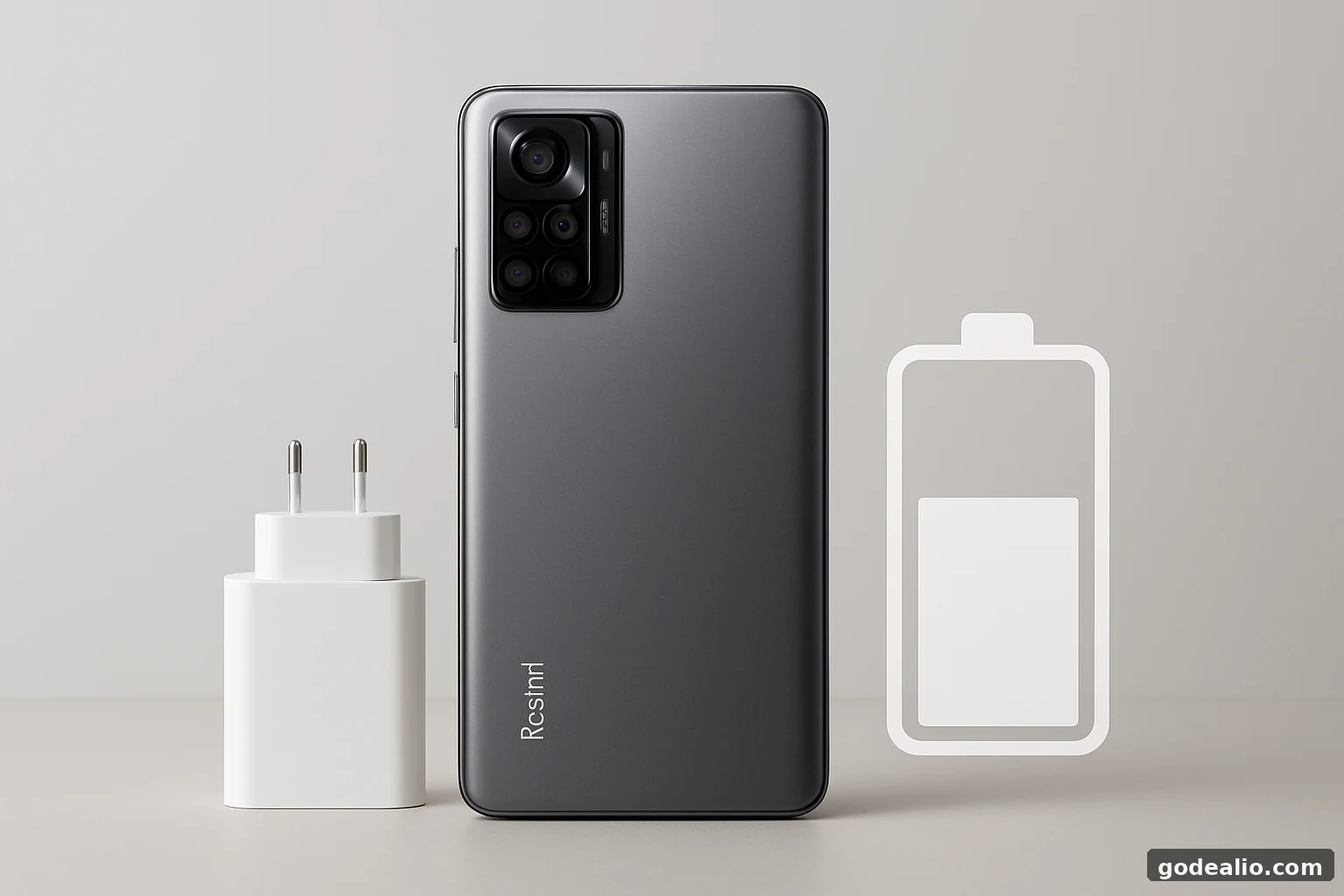
Redmi Note 17 Pro Max launches in India on September 15, 2026. The global model brings a 10,000mAh silicon-carbon battery, 100W charging, Snapdragon 6 Gen 5, 6.83-inch 1.5K 120Hz AMOLED, 50MP OIS main camera and HyperOS 3.
Tracked price range. Retailer offers may change.
India launch officially scheduled for September 15, 2026; India price and sale date are pending.
Specification Highlights
Expert Review Notes
Review Score Breakdown
10,000mAh silicon-carbon battery, 100W HyperCharge and 27W reverse wired charging create an exceptional endurance package.
6.83-inch 1.5K 120Hz AMOLED plus Gorilla Glass Victus 2 is a strong upper-mid-range specification.
Snapdragon 6 Gen 5 is a modern mid-range platform, though not a flagship gaming chipset.
50MP OIS main, 8MP ultrawide and 32MP front camera offer useful versatility, with hands-on quality still pending.
Android 16-based HyperOS 3 is current; final India support commitment should be confirmed.
Global model lists IP66/IP68/IP69/IP69K protection and Gorilla Glass Victus 2.
5G, Wi-Fi, Bluetooth 6, NFC, infrared and USB-C are documented globally; India band validation remains important.
Launch is confirmed but official INR pricing remains pending.
Outstanding battery hardware with a strong display, useful cameras and modern software, awaiting final India pricing.
Pros
- Massive 10,000mAh silicon-carbon battery is confirmed for the Pro Max and is the defining feature.
- 100W HyperCharge is unusually fast for a phone with this much battery capacity.
- 6.83-inch 1.5K 120Hz AMOLED display gives the global model a strong media and everyday-use specification.
- Snapdragon 6 Gen 5 provides a modern mid-range 5G platform.
- 50MP OIS main camera is paired with an 8MP ultrawide, giving more flexibility than the Pro model's simpler secondary camera setup.
- 32MP front camera and 4K recording support strengthen the creator/video-call specification.
- Global model includes strong IP66/IP68/IP69/IP69K durability claims and Gorilla Glass Victus 2.
- Android 16-based HyperOS 3 and dual speakers round out a comprehensive feature set.
Cons
- Official India pricing is still pending, so the final value score cannot be locked.
- India RAM/storage combinations and exact retail specification should be reconfirmed on September 15.
- Snapdragon 6 Gen 5 is a mid-range chipset, not a flagship gaming processor.
- The 229.5g global-model weight makes this a relatively heavy phone.
- No dedicated telephoto camera is documented.
- Godealio has not yet completed hands-on battery, camera, thermal, benchmark or India carrier testing.
1. Quick verdict for Indian buyers
The Redmi Note 17 Pro Max is no longer just a battery rumour or a Japan-only curiosity. Redmi has confirmed that the Note 17 Pro series will launch in India on September 15, 2026, and the Pro Max is the model associated with the headline 10,000mAh battery. That materially changes this page from a speculative preview into an India-launch-confirmed specification review.
The global Redmi Note 17 Pro Max provides the hardware context: a 10,000mAh silicon-carbon battery, 100W HyperCharge, Snapdragon 6 Gen 5, a 6.83-inch 1.5K 120Hz AMOLED, 50MP OIS main camera, 8MP ultrawide, 32MP selfie camera and Android 16-based HyperOS 3. This is a much more complete product than the earlier draft represented.
For Indian buyers, the remaining uncertainty is mostly commercial rather than technical. Official INR pricing, launch offers, final India memory combinations and the exact local feature sheet still need to be published. That means the phone can be scored on hardware, but final value must wait.
At 9.1/10 on launch specifications, the Redmi Note 17 Pro Max looks exceptional for endurance-focused buyers. The huge battery is supported by a strong display, fast charging, useful camera hardware and high-level global durability specifications.
2. India price, variants and availability
Redmi has officially scheduled the Note 17 Pro series India launch for September 15, 2026. The previous JSON incorrectly said India timing was unconfirmed. That warning should be removed because current launch information now establishes the date.
Official India pricing is still pending. Some third-party databases publish an expected price around ₹49,999, but an expected figure is not the same as Xiaomi India's launch MRP. Godealio should not convert that estimate into a factual price.
The global model is documented with 8GB RAM and 256GB storage, while select listings mention additional capacities. India may receive a different variant mix, so every local RAM/storage combination should be updated from Xiaomi India after launch.
Launch offers can materially change value in India. Bank discounts, exchange bonuses and introductory promotions should be considered alongside MRP when the page is updated on September 15.
3. Design and build
The global Redmi Note 17 Pro Max measures about 163.44 × 78.27 × 8.57 mm and weighs roughly 229.5g. This is a large and relatively heavy smartphone, which is understandable given the 10,000mAh battery and 6.83-inch display.
Durability is unusually ambitious. Xiaomi's global material lists IP66, IP68, IP69 and IP69K dust/water resistance, while the display uses Corning Gorilla Glass Victus 2. Those specifications make ruggedness a meaningful part of the product story rather than an afterthought.
India certification should still be checked at launch because regional product pages can differ. Water resistance also should not be treated as permanent or as permission for deliberate exposure outside manufacturer conditions.
The design trade-off is straightforward: buyers gain extraordinary battery capacity but accept a large footprint and substantial weight. Compact-phone buyers should look elsewhere.
4. Display
The global model uses a 6.83-inch 1.5K CrystalRes AMOLED display with a 120Hz refresh rate. That combination gives the Redmi Note 17 Pro Max a strong foundation for video, reading, gaming and everyday scrolling.
The 1280 × 2772-class resolution is sharper than ordinary Full HD on a panel this large, while AMOLED delivers deep blacks and high contrast. A 120Hz refresh rate makes animations and scrolling look smoother and can improve supported game experiences.
Corning Gorilla Glass Victus 2 is documented globally, adding a stronger protection story. Xiaomi also promotes eye-comfort features on the global product page.
Peak brightness and every India display certification should be reconfirmed from the local page, but the core panel specification is already strong enough to earn a 9.3/10 launch-spec display score.
5. Performance and thermals
Snapdragon 6 Gen 5 powers the global Redmi Note 17 Pro Max. This is a modern mid-range Qualcomm platform designed for mainstream 5G phones, not a flagship Snapdragon 8-series competitor.
For daily use, the chipset should comfortably target messaging, UPI, social media, navigation, video, photography and normal multitasking. The documented 8GB RAM configuration is also a sensible baseline.
Performance-focused buyers should keep expectations realistic. Demanding games, video exports and sustained heavy workloads will separate this platform from higher-tier chips.
Thermal behaviour cannot be responsibly scored without a retail device. Godealio should test sustained CPU/GPU performance, frame stability, charging heat and surface temperatures after launch. The 8.6/10 performance score therefore reflects chipset positioning rather than invented benchmark results.
6. Gaming
The Redmi Note 17 Pro Max has two features that help gaming immediately: a 120Hz AMOLED display and an enormous 10,000mAh battery. The first improves fluidity in supported titles, while the second provides a much larger energy reserve for long sessions.
Snapdragon 6 Gen 5 remains a mid-range processor, so the phone should be approached as an endurance-oriented gaming option rather than a dedicated gaming flagship. Balanced settings will be more appropriate in the heaviest titles.
Xiaomi's global material publishes long gaming-endurance claims under laboratory conditions. Those figures are useful context but should not be presented as independent Godealio measurements.
After launch, the correct test is a sustained session measuring average FPS, low FPS, temperature, brightness behaviour and battery loss. Until then, the battery advantage is clear while sustained gaming performance remains to be measured.
7. Camera and video
The global camera system is much clearer than the earlier draft suggested. It combines a 50MP f/1.5 main camera with optical image stabilisation and an 8MP f/2.2 ultrawide camera. A 32MP front camera handles selfies and video calls.
OIS is particularly valuable on the main camera because it improves the hardware foundation for low-light shots and steadier video. The ultrawide adds useful versatility for landscapes, architecture and groups, though its 8MP resolution is modest.
The rear camera supports 4K video at 30fps and 1080p at 30 or 60fps on the global specification. The front camera also supports 4K/30fps, which is useful for creators and higher-quality video calls or recordings.
There is no dedicated optical telephoto, so buyers who prioritise zoom photography should compare alternatives. Image processing, HDR, skin tones and low-light consistency still require hands-on testing.
On specification alone, the camera package is a solid 8.8/10: practical and versatile enough for the category, but not the central reason to choose this phone.
8. Battery and charging
The 10,000mAh silicon-carbon battery is the Redmi Note 17 Pro Max's defining feature and is officially documented by Xiaomi globally. Redmi has also confirmed that the India-bound Note 17 Pro series reaches up to 10,000mAh, making the Pro Max the endurance headline of the lineup.
Silicon-carbon chemistry helps manufacturers increase energy density, allowing very large capacities without simply scaling battery volume in direct proportion. Xiaomi says the global phone uses a high-silicon battery design and promotes multi-day usage under its internal test conditions.
100W HyperCharge is equally important because a 10,000mAh battery paired with slow charging would be inconvenient. The global model also supports up to 27W reverse wired charging, allowing the phone to function as a substantial emergency power source for compatible devices.
Manufacturer endurance claims are not substitutes for independent testing. Godealio should measure mixed Wi-Fi/5G use, video, navigation, gaming, hotspot, standby and a full charging curve on the India retail unit.
Even before those tests, the combination is exceptional enough to merit 10/10 for battery and charging specifications. The final real-world endurance score can be adjusted after hands-on measurements.
9. Software and update policy
The global Redmi Note 17 Pro Max runs HyperOS 3 based on Android 16. This corrects the old draft, which treated the operating system as unknown.
HyperOS provides Xiaomi's current interface, ecosystem integration, personalisation and AI-assisted features. Exact AI availability can depend on language, region, account and software version.
Xiaomi globally promotes a long-lasting software experience for the device, but the exact India Android-upgrade and security-patch commitment should be copied from the local launch material rather than inferred.
Indian buyers should also review recommendations, permissions and preinstalled applications during setup because regional firmware can differ. The modern Android 16 base is a strength; long-term support policy remains a launch-day item to confirm.
10. 5G, calls and connectivity in India
The global Redmi Note 17 Pro Max supports dual-SIM 5G and a broad radio set that includes important India bands such as n28, n40, n41, n77 and n78. That is a much stronger basis for India readiness than the empty connectivity section in the original JSON.
Global listings also document Wi-Fi, Bluetooth 6.0, NFC, infrared, GPS/GNSS and USB Type-C. VoLTE support is documented by current specification databases, while Wi-Fi calling should be verified against the India firmware and carrier.
Band support on paper does not guarantee identical real-world performance. Godealio should test Jio and Airtel 5G, indoor signal behaviour, call stability, hotspot performance and navigation after the India unit becomes available.
The huge battery makes this device particularly attractive for connectivity-heavy workloads such as hotspot, navigation and long 5G sessions.
11. Audio, biometrics and daily usability
Xiaomi's global specification lists dual speakers with Dolby Atmos, strengthening the media experience alongside the large AMOLED display. Bluetooth 6.0 supports wireless audio, while the global model does not position a 3.5mm headphone jack as a core feature.
An in-display fingerprint sensor provides biometric unlocking. Software face unlock can add convenience, although fingerprint authentication remains the more important method for secure daily use.
The largest usability trade-off is physical mass. At around 229.5g globally, this is not a lightweight phone. The 6.83-inch panel also requires a large body.
For users who value endurance, the weight may be a reasonable exchange for 10,000mAh capacity. Anyone who prioritises one-handed use should handle the retail phone before buying.
12. India usage: who will benefit most
The Redmi Note 17 Pro Max is particularly well suited to Indian users who spend long periods away from reliable charging. Commuters, travellers, students, delivery professionals and hotspot-heavy users can all benefit from the unusually large battery.
Navigation is another strong use case. A 6.83-inch display is easy to read in maps, while 10,000mAh provides far more energy reserve for GPS, mobile data and high screen brightness than a conventional battery.
Android 16 and HyperOS support mainstream Indian apps including UPI applications subject to their normal device requirements. Broad global 5G band support also provides a good foundation for Jio and Airtel.
India-specific testing still matters. Carrier aggregation, call quality, local firmware, service experience and actual endurance should be validated after launch.
13. Alternatives
The most obvious internal comparison is Redmi Note 17 Pro. The Pro uses a smaller 9,000mAh battery and 67W charging in its documented configuration, while the Pro Max steps up to 10,000mAh and 100W. The Max also uses Snapdragon 6 Gen 5 globally.
Existing Redmi Note 15 Pro 5G and Note 14 Pro 5G pages remain useful for generational context, particularly once the new model's India price is known.
The real external alternatives cannot be ranked responsibly until September 15 pricing arrives. At around ₹50,000, performance and camera expectations are much higher than they would be at a lower transaction price.
Godealio should update this section on launch day with two or three current phones at the same effective price after bank offers.
14. Pros and cons
The strongest advantages are the 10,000mAh silicon-carbon battery, 100W charging, sharp 120Hz AMOLED, OIS main camera, ultrawide camera, modern Android base and extensive global durability claims. Together they create a much more rounded device than a simple battery specialist.
The main compromises are weight, mid-range rather than flagship performance, lack of optical telephoto and the still-unknown India price. Those are meaningful limitations, but they do not erase the uniqueness of the battery package.
The remaining uncertainty is now manageable. Instead of eight broad unresolved warnings, the page only needs launch-day confirmation of India price, variants and any region-dependent specification differences.
15. Final verdict
The Redmi Note 17 Pro Max deserves much more confidence than the original incomplete draft allowed. India launch is officially scheduled for September 15, and Xiaomi's global specification confirms a coherent hardware package around the headline 10,000mAh battery.
100W charging, Snapdragon 6 Gen 5, a 6.83-inch 1.5K 120Hz AMOLED, 50MP OIS main camera, 8MP ultrawide, 32MP front camera, HyperOS 3 and strong global IP protection make it a genuine all-rounder with exceptional endurance potential.
The 9.1/10 score is a launch-specification assessment, not a claim of hands-on performance. Official India price remains the biggest missing variable. If Xiaomi prices it competitively, the Note 17 Pro Max could become one of the year's most compelling battery-first phones.
Decision Snapshot
- You want one of the largest batteries available in a mainstream smartphone.
- You value 100W charging alongside multi-day endurance potential.
- You want a large high-resolution 120Hz AMOLED for media and reading.
- You want OIS plus an ultrawide rather than a single useful rear focal length.
- You need a lightweight or compact phone.
- You prioritise flagship-class gaming performance.
- You need optical telephoto zoom.
- You need a confirmed India price before setting your budget.
- Official India MRP and launch offers.
- India RAM/storage variants.
- Whether every global IP rating and connectivity feature carries over to India.
- India software-update commitment.
- Hands-on battery, camera, thermal and carrier results.
Review Disclosure
Display Analysis
- Large 6.83-inch size will not suit compact-phone buyers.
Performance Analysis
- Mid-range rather than flagship-class chipset.
- Hands-on sustained performance testing pending.
Gaming Analysis
- Popular Android games subject to title-specific settings and optimisation.
Camera Analysis
- No dedicated telephoto.
- Ultrawide is 8MP.
- Independent India camera testing pending.
Battery Analysis
- Manufacturer endurance figures are lab claims, not Godealio measurements.
- Confirm India charger bundle on September 15.
Software Support
- HyperOS AI features subject to region/language availability.
Network Support
- n1
- n2
- n3
- n5
- n7
- n8
- n12
- n20
- n26
- n28
- n38
- n40
- n41
- n48
- n66
- n77
- n78
India Usage
- Official India price remains pending.
- Reconfirm final India RAM/storage, charger bundle and any region-dependent features.
Variants
Box Contents
- Phone
- USB Type-C cable
- SIM eject tool
- Documentation
- Charger/package accessories: confirm India retail bundle
Dimensions And Weight
Water Dust Resistance
Biometrics
Audio
Alternatives
Final Verdict
The Redmi Note 17 Pro Max has moved from an incomplete battery preview to a genuinely compelling India launch candidate. The September 15 India launch is confirmed, and Xiaomi's global specification establishes a much fuller hardware story: 10,000mAh silicon-carbon battery, 100W HyperCharge, Snapdragon 6 Gen 5, 6.83-inch 1.5K 120Hz AMOLED, 50MP OIS main camera, 8MP ultrawide, 32MP front camera, HyperOS 3 and unusually strong durability claims. The principal remaining uncertainty is India pricing and final local variant configuration. At 9.1/10 on launch specifications, this is an excellent battery-first package; the score should be revisited after India pricing and hands-on testing.
FAQs
When will Redmi Note 17 Pro Max launch in India?
The Redmi Note 17 Pro series is officially scheduled to launch in India on September 15, 2026.
What is the Redmi Note 17 Pro Max price in India?
Official India pricing has not been announced as of September 10, 2026. Third-party expected prices should not be treated as Xiaomi's final MRP.
How big is the Redmi Note 17 Pro Max battery?
The global Redmi Note 17 Pro Max has a 10,000mAh silicon-carbon battery with 100W HyperCharge and up to 27W reverse wired charging.
Which processor powers Redmi Note 17 Pro Max?
Xiaomi's global Redmi Note 17 Pro Max uses Qualcomm Snapdragon 6 Gen 5.
What display does Redmi Note 17 Pro Max have?
The global model uses a 6.83-inch 1.5K CrystalRes AMOLED display with a 120Hz refresh rate.
What cameras does Redmi Note 17 Pro Max have?
The global model has a 50MP OIS main camera, 8MP ultrawide and 32MP front camera.
Does Redmi Note 17 Pro Max support 100W charging?
Yes. Xiaomi's global specification lists 100W HyperCharge plus up to 27W reverse wired charging.
Is Redmi Note 17 Pro Max waterproof?
The global model lists IP66, IP68, IP69 and IP69K protection. Confirm the exact India certification when Xiaomi publishes the local specification.
Which Android version does Redmi Note 17 Pro Max run?
The global model runs HyperOS 3 based on Android 16.
Is this a hands-on Redmi Note 17 Pro Max review?
No. This is an India-launch-confirmed specification review. Godealio will need a retail India unit for independent battery, camera, benchmark, thermal and carrier testing.