
iPhone 18 Pro Review: India Buyer Guide
Official-specification review for Indian buyers
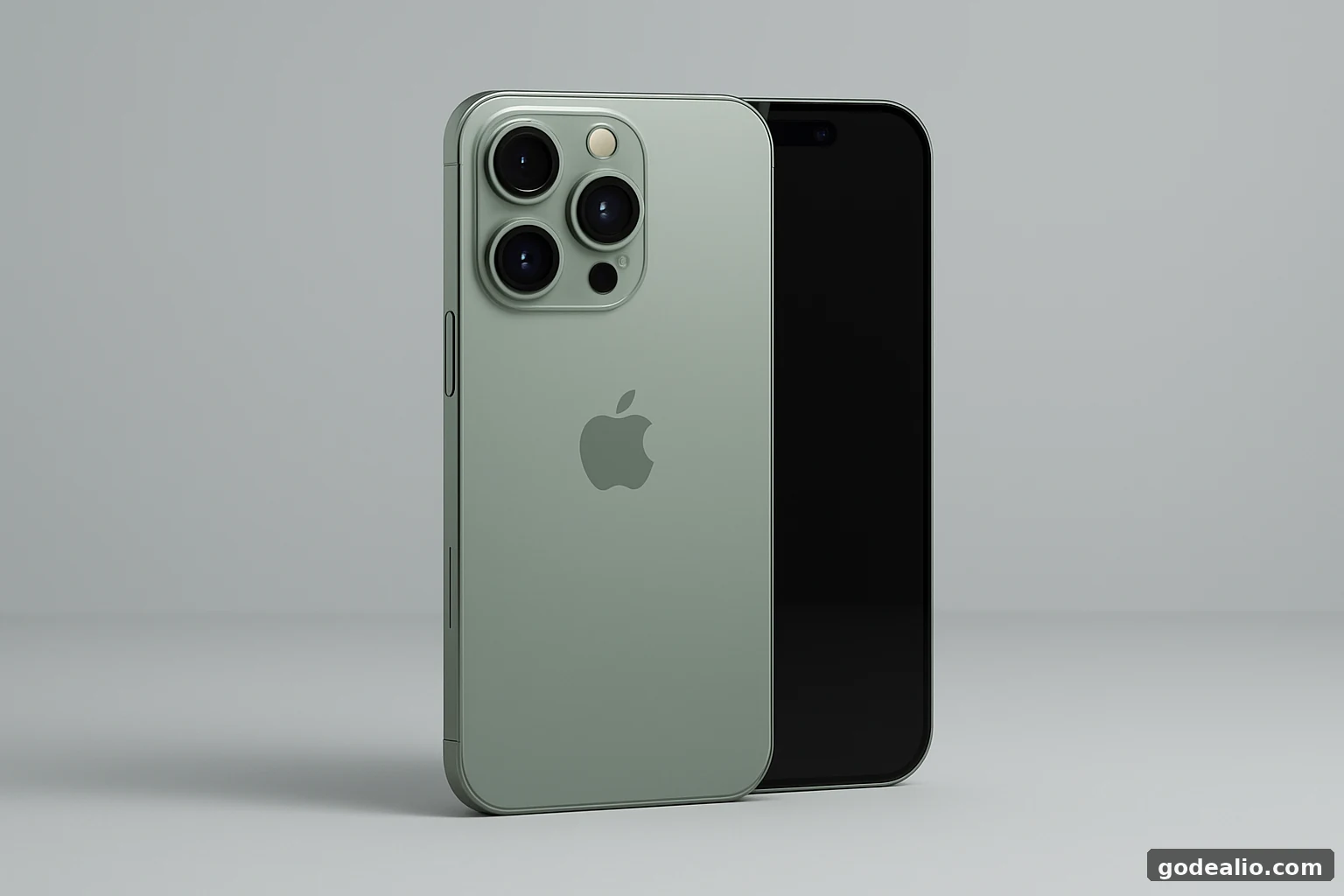
The iPhone 18 Pro is Apple's 2026 compact Pro flagship, combining a 6.3-inch 120Hz Super Retina XDR OLED display, A20 Pro chip, triple 48MP Pro Fusion cameras with variable aperture, iOS 27 with Apple Intelligence and Siri AI, and a starting India price of ₹1,64,900.
Tracked price range. Retailer offers may change.
Pre-orders in India begin at 5:30 PM IST on 12 September 2026; retail availability begins 18 September 2026.
Specification Highlights
Expert Review Notes
Review Score Breakdown
Aluminium unibody, Ceramic Shield 2 front and Ceramic Shield back, premium finishes and strong durability positioning; 211 g is heavy for a 6.3-inch phone.
6.3-inch Super Retina XDR OLED, 120Hz ProMotion, Always-On display, HDR, anti-reflective coating and up to 3,000 nits outdoor brightness.
A20 Pro uses a 6-core CPU, 7-core GPU with Neural Accelerators, Dual 16-core Neural Engine and hardware-accelerated ray tracing, backed by vapour-chamber cooling.
Triple 48MP Pro Fusion system with variable-aperture Main camera, 48MP Ultra Wide, 48MP 4x Telephoto, optical-quality 8x framing, ProRAW and advanced Pro video support.
Apple rates the 18 Pro for up to 34 hours of video playback and supports around 50% wired charge in 15 minutes with suitable hardware, but battery capacity in mAh is not published.
iOS 27, Apple Intelligence and Siri AI provide a strong integrated software/AI platform, though feature availability can vary by language and region.
5G, Apple C2 modem, Wi-Fi 7, Bluetooth 6, Thread, NFC, dual-frequency GPS with NavIC, dual SIM/eSIM, VoLTE and Wi-Fi calling cover key premium requirements.
₹1,64,900 starting price is exceptionally high, making value the weakest part of an otherwise top-tier package.
Pros
- A20 Pro with a 6-core CPU, 7-core GPU and Dual 16-core Neural Engine gives the iPhone 18 Pro a major platform upgrade for sustained performance, graphics and on-device AI.
- The 48MP Pro Fusion camera system is unusually flexible, with a variable-aperture 48MP Main camera, 48MP Ultra Wide and 48MP 4x Telephoto, plus optical-quality 8x framing.
- The 6.3-inch Super Retina XDR OLED display combines ProMotion up to 120Hz, Always-On functionality, up to 3,000 nits outdoor brightness and a new anti-reflective coating.
- A next-generation vapour chamber and the A20 Pro platform directly address sustained-performance and thermal-management needs.
- Apple officially supports Wi-Fi 7, Bluetooth 6, NFC, dual-frequency GPS with NavIC, dual SIM with nano-SIM and eSIM, VoLTE and Wi-Fi calling.
- Fast charging improves substantially, with Apple claiming around 50% in 15 minutes using a compatible 60W-or-higher wired adapter.
- Four storage options from 256GB to 2TB and four finishes give buyers a broader premium configuration range.
Cons
- The ₹1,64,900 starting price is extremely high for the Indian market, and higher-capacity models become substantially more expensive.
- Apple does not publish RAM capacity or the battery's mAh rating, so buyers comparing specification sheets with Android flagships will find some hardware details undisclosed.
- The phone remains heavy for a 6.3-inch flagship at 211 g, which may matter to buyers prioritising one-handed comfort.
- The fastest wired and MagSafe charging requires separately purchased compatible charging hardware.
- This is an official-specification launch review rather than a Godealio hands-on test, so real-world camera consistency, sustained gaming temperatures, battery endurance and network behaviour still require independent measurement.
Quick verdict for Indian buyers
The iPhone 18 Pro is now an official 2026 Apple flagship rather than a rumour-led preview. For Indian buyers, that changes the review completely because launch timing, pricing, storage choices and the core hardware platform can now be discussed from published information instead of expectations. The 256GB model starts at ₹1,64,900, placing it firmly in the ultra-premium category where buyers should expect meaningful improvements across performance, cameras, display, connectivity and long-term usability.
The strongest argument for the phone is how many Pro-level upgrades arrive together. A20 Pro provides the new performance foundation, Apple has added a vapour chamber for sustained workloads, and the rear camera system moves to three 48MP Pro Fusion cameras. The Main camera's variable aperture is particularly notable because it gives photographers more creative control rather than relying entirely on computational processing. The 120Hz Super Retina XDR OLED, faster charging and modern wireless stack round out an unusually complete specification sheet.
The biggest concern is value. At ₹1,64,900 before moving to larger storage capacities, this is not a phone that should be purchased simply because it is the newest iPhone. Buyers should identify which Pro features they will actually use. Photographers, mobile filmmakers, Apple ecosystem users and people who keep their phones for several years have the clearest case. Buyers mainly interested in messaging, social media, streaming and routine photography can obtain excellent experiences for substantially less.
Godealio rates the iPhone 18 Pro 9.4/10 on its official launch specifications and India positioning. That is not presented as a hands-on laboratory score. Battery endurance, sustained gaming temperatures, camera consistency, charging behaviour and Indian carrier performance still need retail-device testing. The score should therefore be revisited when those measurements become available.
India price, variants, and availability
India pricing begins at ₹1,64,900 for 256GB. Apple also offers 512GB at ₹1,89,900, 1TB at ₹2,39,900 and 2TB at ₹3,14,900. The storage ladder matters because the price rises rapidly at the upper end. For most premium users, 256GB should be adequate unless large offline media libraries or professional camera workflows are central to the purchase.
The 512GB configuration is easier to justify for creators who frequently shoot high-resolution photos or Pro video. The 1TB and 2TB models are specialist choices for users who expect to keep large ProRAW, ProRes or other media files locally. A buyer who does not have that workload should think carefully before paying the substantial storage premium.
Apple offers Black, Silver, Glacier and Burgundy finishes. Pre-orders in India begin at 5:30 PM IST on 12 September 2026, followed by retail availability from 18 September. Buyers planning an early purchase should compare Apple's current trade-in, EMI and payment offers rather than judging value only from the headline MRP.
Design and build
The iPhone 18 Pro uses an aluminium unibody with Ceramic Shield 2 protecting the front and Ceramic Shield on the rear. Apple is therefore continuing the premium construction expected from the Pro line while changing the internal engineering to accommodate stronger sustained performance. The design also retains familiar Pro controls such as the Action button and Camera Control.
Dimensions are 150.0 × 71.9 × 8.75 mm and weight is 211 g. The 6.3-inch format is attractive for buyers who want flagship specifications without moving to a very large Pro Max body, but 211 g is still considerable. People upgrading from a lighter standard iPhone should try the device in hand before assuming that the smaller display automatically makes it a lightweight phone.
The next-generation vapour chamber is an important part of the build story because thermal design affects far more than benchmark scores. Long camera recording, gaming, navigation on mobile data and on-device AI can all create sustained heat. Apple's decision to dedicate hardware to heat dissipation should help the A20 Pro maintain performance for longer, although Godealio will need retail-device testing to quantify the improvement.
Display
The 6.3-inch-class Super Retina XDR OLED has a 2622 × 1206 resolution at 460 ppi. ProMotion supports adaptive refresh rates up to 120Hz, while Always-On display remains available. Those specifications make the panel suitable for smooth scrolling, high-frame-rate interaction, photography review, HDR media and day-to-day productivity.
Brightness is another major strength on paper. Apple lists 1,000 nits typical maximum brightness, 1,600 nits peak HDR brightness and up to 3,000 nits peak outdoor brightness. The phone can also reduce the display to 1 nit. For India, where direct sunlight visibility can be a genuine usability issue, the high outdoor peak and new anti-reflective coating are particularly relevant.
A specification cannot fully describe display quality. Colour accuracy, reflections, automatic brightness behaviour, PWM characteristics and sustained brightness under heat still require measurement. Nevertheless, the official specification places the iPhone 18 Pro among the strongest premium displays and there is no obvious display compromise simply because this is the smaller Pro model.
A20 Pro performance and thermals
A20 Pro is the centre of the performance upgrade. Apple specifies a 6-core CPU with two performance and four efficiency cores, a 7-core GPU with Neural Accelerators, a Dual 16-core Neural Engine and hardware-accelerated ray tracing. Apple says the platform is produced using a 2-nanometre process and provides 50% more memory bandwidth than A19 Pro.
Apple also claims that the 7-core GPU can be up to 40% faster than A19 Pro. Those manufacturer figures are useful for understanding the intended generational improvement but should not be treated as independent benchmark results. Godealio has not yet measured CPU loops, GPU stability, app launch times or memory retention on a retail unit.
The vapour chamber may ultimately matter as much as peak chip speed. A phone can produce excellent short benchmark numbers and still throttle under prolonged workloads. The iPhone 18 Pro's thermal hardware is designed to improve sustained performance during gaming, video capture and AI processing. That is exactly what should be tested after launch.
Apple does not publish RAM capacity in the official consumer specification sheet. Rather than filling that field from leaks or unofficial databases, this review leaves RAM undisclosed. Buyers should focus on measured multitasking and app retention once independent tests become available.
Camera and video
The rear camera system consists of three 48MP Pro Fusion cameras. The 48MP Fusion Main is the headline upgrade because it supports variable aperture settings of f/1.48, f/1.8, f/2.8 and f/4.0. Variable aperture can give photographers more control over light intake and depth characteristics instead of leaving every decision to software.
The Main camera also uses second-generation sensor-shift optical image stabilisation and supports high-resolution 24MP and 48MP output. An optical-quality 2x framing option provides a useful intermediate focal length for portraits and everyday subjects. The practical test will be whether variable aperture produces visibly better creative flexibility and consistency across different lighting conditions.
The 48MP Ultra Wide uses a 13 mm equivalent perspective, f/2.2 aperture and 120-degree field of view. It supports high-resolution capture and macro photography. Matching the Ultra Wide more closely to the Main camera's resolution should improve versatility, but low-light detail, edge sharpness and colour matching need direct comparison.
The 48MP Fusion Telephoto provides a 100 mm equivalent 4x view with f/2.8 aperture, tetraprism optics, autofocus and 3D sensor-shift optical image stabilisation. Apple also provides a 12MP optical-quality 8x framing option at 200 mm and digital zoom up to 40x for stills. Buyers should distinguish optical-quality framing from a separate native 8x optical lens when comparing competing phones.
Video remains one of the strongest Pro differentiators. The Main camera supports 4K Dolby Vision up to 120 fps, while external workflows can use ProRes up to 4K120. ProRes RAW, Apple Log 2, genlock, ACES support, Action mode, Cinematic mode and spatial video make the phone unusually capable for mobile production. Creators using these formats should plan storage carefully because professional video files can become very large.
18MP Center Stage front camera
The 18MP Center Stage front camera uses an f/1.9 aperture and autofocus with Focus Pixels. It supports Center Stage for photos and video calls, ultra-stabilised video, Night mode, Portraits, ProRAW, Dual Capture and 4K Dolby Vision recording up to 60 fps.
This is more than a megapixel update for users who regularly create vertical video, conduct video calls or record themselves while moving. Autofocus and stabilisation can improve consistency, while Center Stage can make framing more flexible. Actual indoor detail, skin-tone rendering and third-party social-app quality still need hands-on evaluation.
Battery and charging
Apple does not publish the battery capacity in mAh, so this review does not substitute an unofficial figure. Apple instead rates the iPhone 18 Pro for up to 34 hours of video playback and up to 31 hours of streamed video playback, alongside its broader typical-use estimate. Manufacturer playback figures are useful for lineup comparison but are not equivalent to independent mixed-use battery testing.
Charging receives a meaningful improvement. Apple says the phone can reach around 50% in approximately 15 minutes when used with a compatible 60W-or-higher Adjustable Voltage Supply adapter and USB-C cable. That can make short charging sessions much more useful for commuters and heavy users.
MagSafe and Qi2 wireless charging are supported at up to 25W. Buyers should remember that the hardware needed to achieve maximum wired or wireless speeds may be sold separately. Godealio still needs to measure a full 0-to-100 charging cycle, heat during charging and practical mixed-use endurance before assigning a hands-on battery score.
iOS 27, Apple Intelligence and Siri AI
The iPhone 18 Pro ships with iOS 27 and supports Apple Intelligence and Siri AI. Apple's strategy is based on tight integration between the A20 Pro, Neural Engine, operating system and first-party applications. That integration is potentially more important than simply counting individual AI features because it determines how naturally those capabilities fit into everyday workflows.
Siri AI is positioned as more conversational and context-aware, while Visual Intelligence and other Apple Intelligence functions broaden the phone's AI toolkit. Buyers interested primarily in AI should confirm that the specific feature and language they want are available in India because Apple notes that availability can vary by language and region.
Apple has a strong historical record of supporting iPhones for many years, but the cited iPhone 18 Pro specification page does not provide a fixed numerical OS-update commitment. This review therefore avoids inventing a guaranteed support duration. Long-term support remains a major purchasing consideration and should be tracked against Apple's actual update releases.
5G, Wi-Fi, calls, GPS and India connectivity
For Indian users, the connectivity sheet is comprehensive. The official India model lists a broad range of sub-6GHz 5G bands, including n28, n40, n41, n77 and n78. Apple uses its C2 cellular modem, while dual SIM through nano-SIM and eSIM, dual eSIM, VoLTE and Wi-Fi calling are supported.
Local wireless connectivity includes Wi-Fi 7 with 2x2 MIMO, Bluetooth 6, Thread, NFC with reader mode and second-generation Ultra Wideband. USB-C supports USB 3 transfer speeds up to 10 Gbps and DisplayPort, which is especially useful to creators moving large video files or using external storage and displays.
Location hardware includes precision dual-frequency GPS and support for GLONASS, Galileo, QZSS, BeiDou and India's NavIC system. The specification is excellent, but radio performance cannot be judged from band support alone. Godealio should still test Jio and Airtel 5G reception, call stability, hotspot behaviour and GPS accuracy on a retail device.
Why creators may prefer the iPhone 18 Pro
The iPhone 18 Pro is particularly compelling for creators because its strengths extend beyond the camera sensors. ProRAW gives photographers greater editing flexibility, while ProRes RAW, Apple Log 2, ACES and genlock support provide tools that fit professional video workflows. USB 3 transfer speeds also matter when large media files need to leave the phone quickly.
Four studio-quality microphones, wind-noise reduction and Audio Mix strengthen the recording package. A creator who shoots frequently should think about the entire workflow — capture, storage, transfer, editing and backup — before selecting capacity. For that audience, 512GB or more can be rational even though the price premium is substantial.
For ordinary users, these capabilities should not automatically justify the price. Someone who rarely records beyond standard social video may never benefit from ProRes RAW or genlock. The phone's value improves when its specialised tools are actually part of the buyer's workflow.
Alternatives to consider
The previous iPhone 17 Pro is the first alternative to check because a large post-launch discount could make it substantially better value. Buyers should compare the actual selling price rather than the original MRP and decide whether A20 Pro, variable aperture, newer AI features and faster charging justify the difference.
The iPhone 18 Pro Max is the more logical Apple option for users who prioritise the largest display and maximum battery endurance over compactness. The smaller 18 Pro is preferable when pocketability and one-handed reach matter more than having the biggest possible screen.
Android flagships from Samsung, Google, OnePlus, Vivo, OPPO and Xiaomi also deserve comparison at this price. Some may offer more aggressive charging, larger batteries or different zoom hardware for less money. The iPhone's counterargument is its integrated ecosystem, creator video workflow, software experience and Apple-specific services.
Pros, cons and final score
The iPhone 18 Pro has very few obvious technical weaknesses on its official specification sheet. The display is premium, A20 Pro is extremely ambitious, the thermal system is more serious, all three rear cameras are 48MP Pro Fusion units, connectivity is modern and charging is meaningfully faster. For buyers who use the Pro capabilities, it is a comprehensive flagship.
The main weakness is the ₹1,64,900 starting price. Moving to 512GB, 1TB or 2TB increases the cost dramatically, and buyers must also account for separately purchased charging accessories if they want maximum charging performance. At 211 g, it is also heavier than some buyers may expect from a 6.3-inch phone.
Godealio's launch-specification score is 9.4/10. Camera consistency, real battery endurance, sustained gaming performance, charging temperatures and Jio/Airtel behaviour remain pending hands-on tests. The editorial score should be updated when those results are available rather than presenting launch specifications as if they were laboratory measurements.
Decision Snapshot
- You want Apple's newest compact Pro flagship and prefer a 6.3-inch screen over a 6.9-inch Pro Max.
- Mobile photography and video are major priorities and you want variable aperture, ProRAW, ProRes RAW, Apple Log 2 and strong zoom versatility.
- You use the Apple ecosystem heavily and value iOS 27, Apple Intelligence, Siri AI, Face ID, MagSafe and long-term platform integration.
- You want top-tier sustained performance with A20 Pro and vapour-chamber cooling.
- Your budget does not comfortably extend beyond ₹1.6 lakh.
- You want the largest screen and longest battery life in the lineup; the Pro Max is the better fit.
- You prioritise maximum value, very fast proprietary charging or aggressive Android hardware-per-rupee.
- You need independent real-world testing before buying rather than relying on launch specifications.
- Confirm the exact storage variant you need because moving from 256GB to 2TB dramatically increases the price.
- Compare current trade-in, cashback and EMI offers on Apple India before purchasing.
- Wait for real-world battery, sustained gaming, camera and thermal tests if those are critical to your decision.
- Verify Siri AI and Apple Intelligence feature/language availability for the workflows you care about.
Review Disclosure
Display Analysis
- Real-world colour calibration and outdoor readability have not yet been independently measured by Godealio.
Performance Analysis
- Apple says the 7-core GPU is up to 40% faster than A19 Pro.
- Apple says A20 Pro provides 50% more memory bandwidth than A19 Pro.
- No independent Godealio benchmark or thermal-loop data is available yet.
- Apple does not disclose RAM capacity in the official consumer specification sheet.
Gaming Analysis
Camera Analysis
- Godealio has not yet conducted hands-on camera comparisons.
- Apple's launch claims still require independent low-light, zoom and sustained-video validation.
Battery Analysis
- Battery capacity in mAh is not published by Apple.
- Real-world endurance and charging temperatures remain to be independently tested.
Software Support
- Apple Intelligence
- Siri AI
- Visual Intelligence
- On-device AI accelerated by Dual 16-core Neural Engine
Network Support
- n1
- n2
- n3
- n5
- n7
- n8
- n12
- n20
- n25
- n26
- n28
- n30
- n38
- n40
- n41
- n48
- n53
- n66
- n70
- n75
- n77
- n78
- n79
India Usage
- Siri AI and Apple Intelligence feature availability can vary by language and region.
- Real-world Jio/Airtel reception and thermals should be validated after retail availability.
Variants
Box Contents
- iPhone 18 Pro
- USB-C charge cable
- Documentation
Dimensions And Weight
Water Dust Resistance
Biometrics
Audio
Alternatives
Final Verdict
At launch, the iPhone 18 Pro looks like a serious compact flagship rather than a routine annual refresh. The A20 Pro platform, new vapour chamber, variable-aperture 48MP Main camera, 48MP Ultra Wide and 48MP Telephoto, improved charging and iOS 27/Siri AI package address performance, imaging, endurance and intelligence together. The 6.3-inch size keeps it more manageable than the Pro Max, although 211 g is still substantial. For Indian buyers the value equation is difficult: ₹1,64,900 for 256GB places it firmly in ultra-premium territory. Buyers deeply invested in Apple's ecosystem, mobile video, photography and long-term flagship ownership have the clearest reason to consider it. Value-focused shoppers should compare it carefully with current Android flagships and Apple's previous Pro generation. Godealio's launch-specification score is 9.4/10; this should be revisited after hands-on testing.
FAQs
What is the iPhone 18 Pro price in India?
Apple India lists the iPhone 18 Pro from ₹1,64,900 for 256GB. The 512GB model is ₹1,89,900, 1TB is ₹2,39,900 and 2TB is ₹3,14,900.
When does the iPhone 18 Pro launch in India?
Pre-orders begin at 5:30 PM IST on 12 September 2026, and retail availability begins on 18 September 2026.
What processor does the iPhone 18 Pro use?
It uses Apple's A20 Pro chip with a 6-core CPU, 7-core GPU with Neural Accelerators and a Dual 16-core Neural Engine.
What cameras are on the iPhone 18 Pro?
The rear system uses a 48MP variable-aperture Fusion Main, 48MP Fusion Ultra Wide and 48MP 4x Fusion Telephoto. The front camera is an 18MP Center Stage unit.
Does the iPhone 18 Pro support 120Hz?
Yes. Its Super Retina XDR OLED display supports ProMotion adaptive refresh rates up to 120Hz and Always-On display.
How fast does the iPhone 18 Pro charge?
Apple says it can reach around 50% in 15 minutes using a compatible 60W-or-higher AVS wired adapter. MagSafe and Qi2 wireless charging support up to 25W.
Does the iPhone 18 Pro support Jio and Airtel 5G?
The India model officially supports a broad set of sub-6GHz 5G bands used in India, including n28, n40, n41, n77 and n78. Real-world carrier testing is still pending.
Is the iPhone 18 Pro worth buying in India?
It is most compelling for Apple ecosystem users, creators and buyers who want a compact Pro flagship. At ₹1,64,900, value is its main weakness, so comparing discounted iPhone 17 Pro models and current Android flagships is sensible.