
UK Moves to Restrict Social Media Access for Children Under 16 Starting 2027
The UK government plans to block under-16s from major social media platforms from spring 2027, with stronger age checks and wider safety rules for harmful online features.
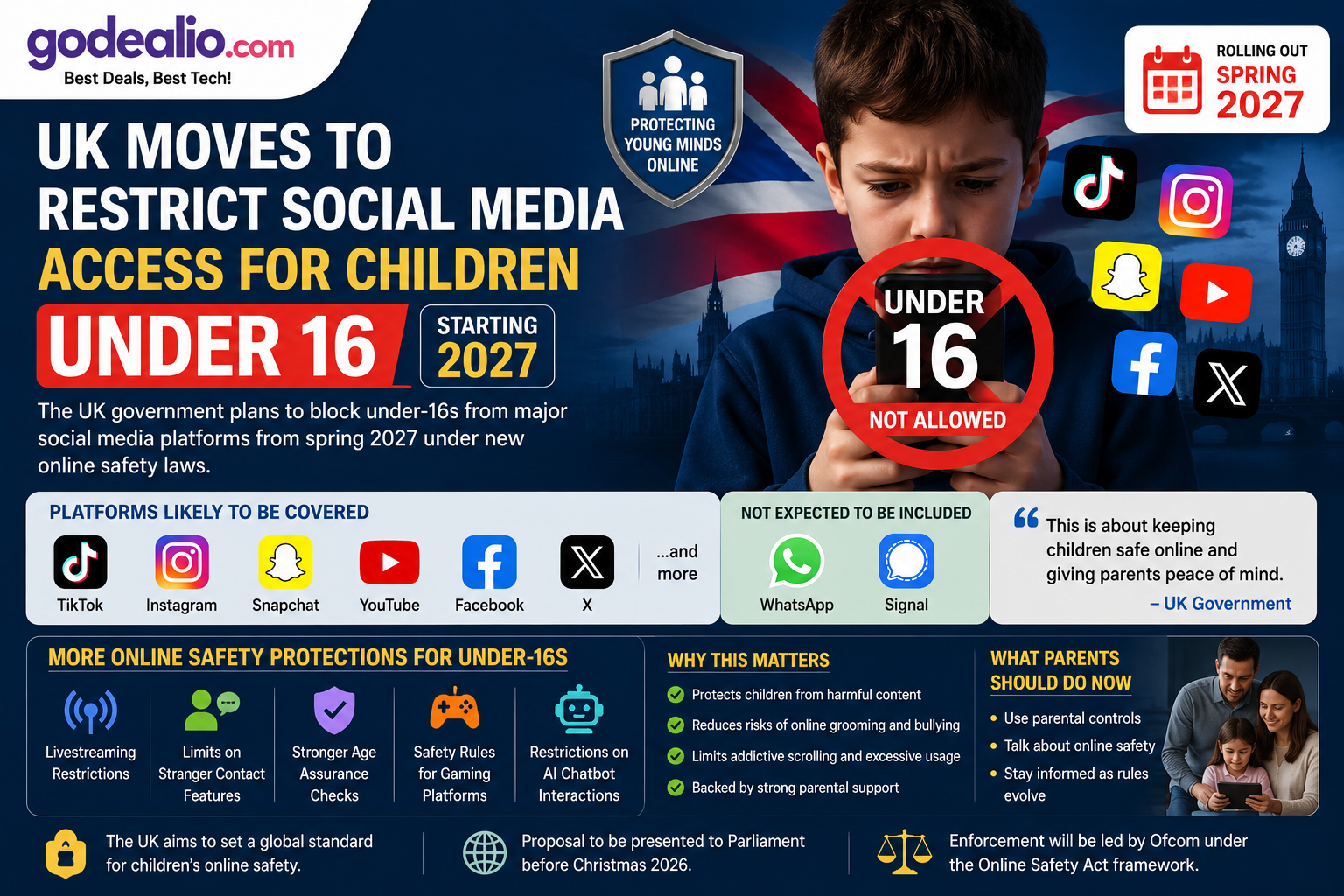
The UK government has announced plans to restrict social media access for children under 16 from spring 2027. The proposal would stop major platforms such as TikTok, Instagram, Snapchat, Facebook, YouTube and X from offering services to under-16 users. The government says the move is intended to protect children from harmful content, addictive scrolling and unsafe online contact. Messaging services such as WhatsApp and Signal are not expected to be included in the main social media ban. Platforms may also face restrictions on livestreaming and stranger communication features for younger users.
Brand
UK Government
Model
Under-16 Social Media Restriction
Topic
Online Safety
Content Type
news
Launch Status
Planned
Availability
Expected Spring 2027
Rating
8.8
Pros
- Aims to protect children from harmful online content
- Targets addictive social media use
- Could reduce stranger contact risks
- Includes stronger age-assurance requirements
- Backed by strong parental support in consultation
Cons
- May affect young users who rely on online communities
- Enforcement could be technically difficult
- Privacy concerns around age verification
- Children may move to less regulated platforms
- Platforms and campaigners warn of unintended consequences
Final Verdict
The UK's planned under-16 social media restriction could become one of the toughest online safety moves in the world. While the government argues it will protect children, the policy will need careful enforcement, privacy safeguards and support for vulnerable young users who rely on online communities.
UK Plans Social Media Ban for Under-16s
The UK government has announced plans to stop social media platforms from offering services to children under 16 from spring 2027.
The proposal is expected to be brought before Parliament before Christmas 2026, with protections planned to come into force in spring 2027.
The government says the move is designed to give children more protection from harmful online environments and excessive scrolling.
Which Platforms Could Be Covered?
The ban is expected to apply to user-to-user social platforms where people post content, interact socially and receive algorithmic recommendations.
The UK government has named platforms such as Snapchat, TikTok, YouTube, Instagram, Facebook and X as examples of services likely to fall under the proposal.
Messaging services such as WhatsApp and Signal are not expected to be included in the main social media ban.
- TikTok
- Snapchat
- YouTube
- X
- Other algorithm-driven social platforms
Why Is the UK Taking This Step?
The government says children are facing increasing risks from harmful content, addictive platform design, stranger contact and online pressure.
Officials argue that a clear minimum age of 16 would make the rules easier for parents, schools and platforms to understand.
The policy follows growing global debate over how much access children should have to social media.
More Than Just a Social Media Ban
The UK government says it also wants to restrict harmful online features for under-16s across a wider range of services.
These may include livestreaming limits and blocks on stranger communication features, including on some gaming platforms.
The government has also discussed restrictions around romantic AI chatbot interactions for younger users.
- Livestreaming restrictions
- Stranger-contact limits
- Age checks
- Gaming-site protections
- AI chatbot safety rules
How Could the Ban Be Enforced?
Platforms are expected to use age-assurance tools such as age estimation, ID checks or other verification systems.
Ofcom is expected to play a major role in enforcement under the UK's online safety framework.
However, regulators have warned that enforcement will require clear laws, resources and practical implementation standards.
Concerns and Criticism
Some campaigners warn that a blanket social media ban could isolate disabled children and other young people who rely on online communities for friendship, support and information.
Technology companies have also warned that strict bans may push teenagers toward less safe or less regulated platforms.
Privacy groups are likely to scrutinize how age verification will work and how children's data will be protected.
UK Follows a Global Online Safety Trend
The UK proposal follows similar global debates about children's access to social media.
Australia has already introduced a social media minimum age framework, and the UK government has said it plans to use a similar model.
More countries are now considering age-based limits as concerns grow over children's mental health and online safety.
What Parents Should Know
The rules are not expected to take effect immediately. The current timeline points to spring 2027.
Parents should continue using device-level parental controls, app limits and open conversations about online safety while the policy is developed.
The final rules may change as the proposal moves through Parliament and regulators publish enforcement guidance.
Final Thoughts
The UK's planned social media restriction for under-16s could reshape how young people use the internet.
The goal is child protection, but the success of the policy will depend on enforcement, privacy protection and whether platforms can create safer alternatives for young users.
FAQs
When will the UK under-16 social media restriction start?
The UK government expects protections to come into force in spring 2027.
Which social media platforms will be affected?
The proposal is expected to cover platforms such as TikTok, Instagram, Snapchat, YouTube, Facebook and X.
Will WhatsApp be banned for under-16s?
The UK government says messaging services such as WhatsApp and Signal are not intended to be included in the main social media ban.
Why is the UK restricting social media for children?
The government says the move is intended to protect children from harmful content, addictive scrolling, unsafe contact and online pressure.
How will platforms check a user's age?
Platforms may need to use age-assurance tools such as age estimation, ID verification or other checks, though final enforcement details are still being developed.
Are there concerns about the policy?
Yes. Campaigners and tech companies have raised concerns about privacy, enforcement challenges and the risk of isolating young users who depend on online communities.