
RBI proposes one-hour delay for UPI and other transfers above Rs 10,000 to curb scams
The Reserve Bank of India has floated a proposal for a one-hour cooling-off period on certain high-value digital transfers to help users stop fraudulent payments in time.
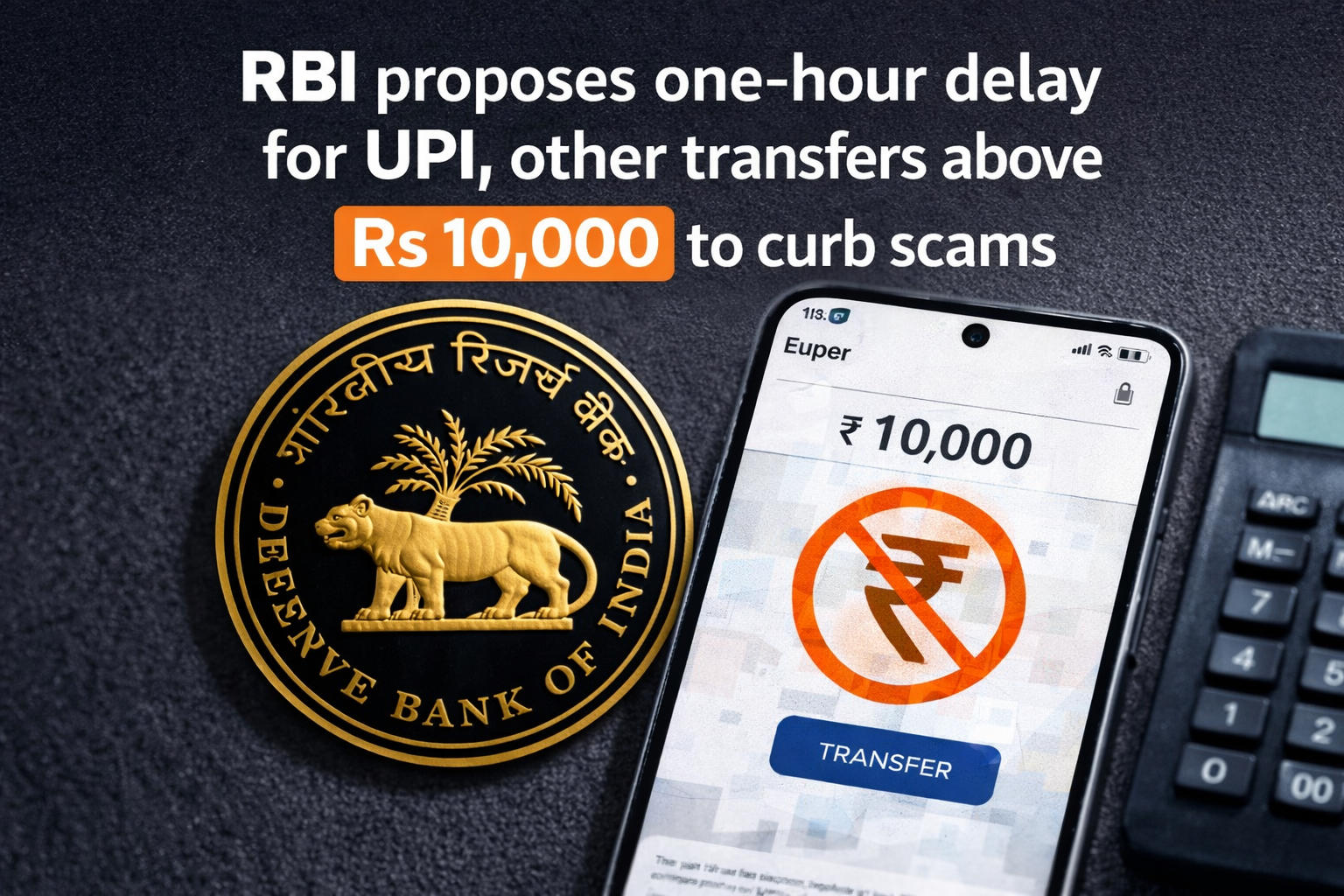
The Reserve Bank of India has proposed a one-hour delay for certain digital fund transfers above Rs 10,000 as part of a wider anti-fraud framework. The idea is to create a cooling-off window for higher-risk transactions so users can cancel suspicious transfers before money leaves their account for good. The proposal is part of an RBI discussion paper released on April 9, 2026, and feedback has been invited until May 8, 2026. :contentReference[oaicite:0]{index=0}
Brand
RBI
What RBI has proposed
The RBI has suggested a mandatory delay of up to one hour for certain high-value digital transfers above Rs 10,000. The proposal mainly targets fast payment systems such as UPI and other instant fund transfer channels.
The main purpose is to create a cooling-off period that gives users time to review, report, or cancel a transfer if they realize it may be fraudulent.
Which transactions could be affected
Current reporting around the RBI discussion paper indicates that the proposal is primarily aimed at higher-value peer-to-peer transfers, especially payments to new or unverified recipients.
Low-value transactions and merchant payments are expected to remain outside this delay so that normal shopping and business payments are not disrupted.
- Possible one-hour delay above Rs 10,000
- Main focus on peer-to-peer transfers
- Likely emphasis on new or non-whitelisted beneficiaries
- Merchant payments expected to remain instant
Why RBI is considering this move
Digital payment fraud has risen sharply in recent years, and instant payment rails often leave users with almost no time to reverse a mistaken or manipulated transfer.
RBI’s proposal tries to slow down only the riskier transactions rather than affecting all digital payments. That makes it a fraud-control step rather than a broad rollback of instant payments.
Other safeguards under discussion
The one-hour delay is part of a larger package of anti-fraud ideas. Reports on the discussion paper say the RBI is also considering extra checks for senior citizens and persons with disabilities, transaction caps on suspicious accounts, and a kill switch that would let users quickly freeze digital payment access.
Some reports also mention the option to whitelist trusted payees so repeat transfers to known recipients may not face the same delay.
Current status
This is still a proposal, not a final rule. The RBI released the discussion paper on April 9, 2026, and has asked for comments until May 8, 2026. Final rules, if adopted, may change after consultation.
FAQs
Is RBI’s one-hour UPI delay rule already active?
No. It is currently a proposal in an RBI discussion paper and has not been implemented yet.
Will all UPI payments be delayed by one hour?
No. Current reporting suggests the proposal mainly targets certain higher-value peer-to-peer transfers above Rs 10,000, while low-value and merchant payments are expected to remain unaffected.
Why is RBI proposing this delay?
The idea is to reduce fraud by giving users a window to cancel suspicious transactions before funds are fully transferred.
When can people send feedback on the proposal?
The RBI has invited public feedback until May 8, 2026.