
iPhone Duo foldable reported with IP68, Touch ID and split-screen multitasking
The foldable iPhone is being positioned as a phone-and-tablet hybrid, but Indian buyers still need local pricing and launch details before planning a purchase.
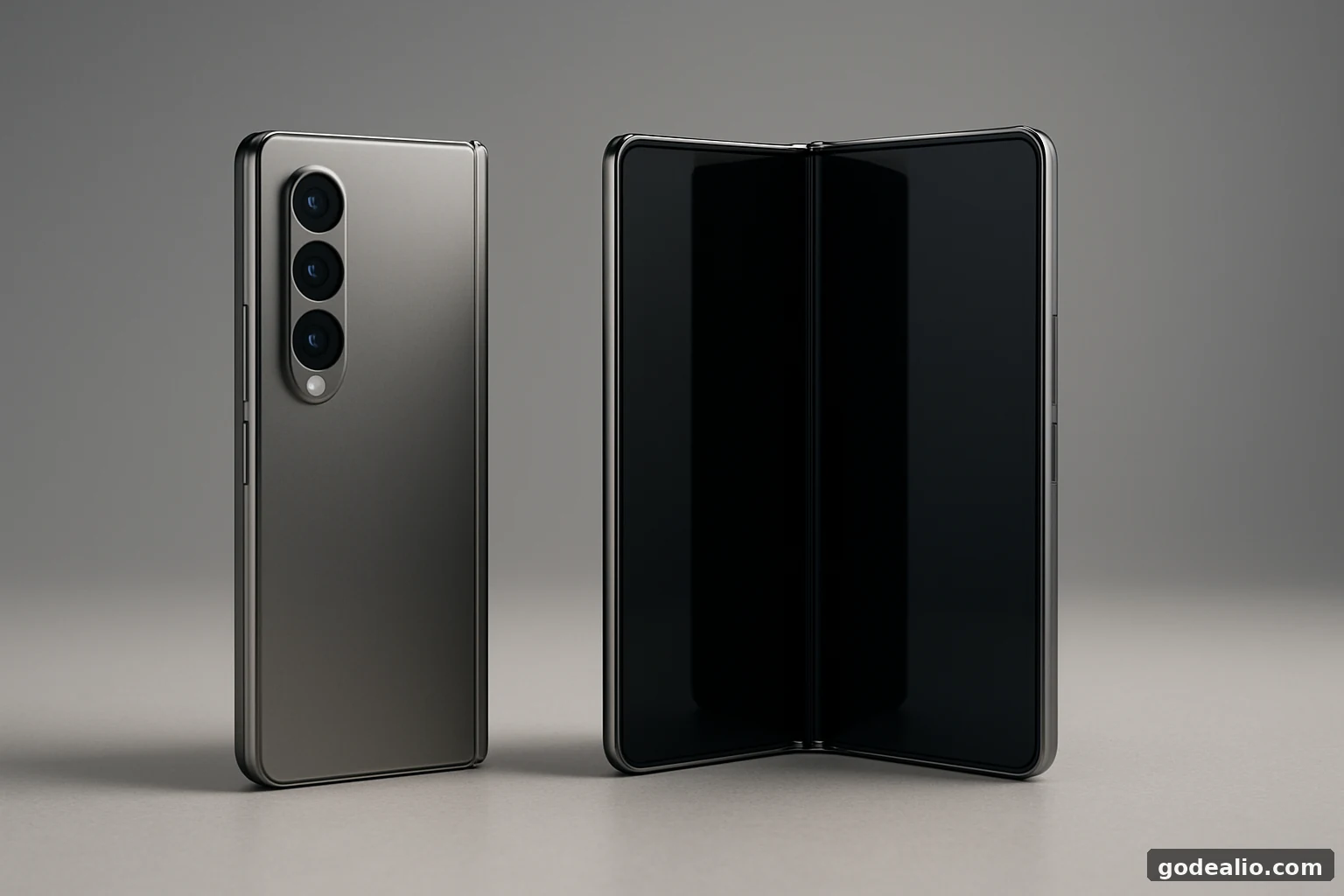
The reported iPhone Duo foldable combines a 5.4-inch outer display, 7.6-inch inner screen, titanium chassis, IP68 protection, Touch ID and split-screen multitasking. A20 Pro, up to 2TB storage and a $1,999 starting price are also reported, while India pricing and launch timing remain unconfirmed.
Brand
Apple
Model
iPhone Duo
Content Type
news
Launch Status
unknown
Availability
Global launch reported; India availability not confirmed
Key News
Label
Design approach
Value
Wider, shorter foldable layout aimed at phone-and-tablet use
Verification Status
reported
Label
Displays
Value
5.4-inch outer panel and 7.6-inch inner panel
Verification Status
reported
Label
Protection
Value
Titanium chassis with IP68 dust and water resistance
Verification Status
reported
Label
Hinge
Value
Reported to fold fully flat and hold multiple angles
Verification Status
reported
Label
Launch date
Value
Pre-orders reportedly start on October 16
Verification Status
reported
Label
Price
Value
Base price reported at $1,999, with some regions closer to $2,700
Verification Status
reported
Specification Highlights
Label
Outer display
Value
5.4-inch panel
Verification Status
reported
Label
Inner display
Value
7.6-inch panel
Verification Status
reported
Label
Thickness unfolded
Value
5.3mm
Verification Status
reported
Label
Weight
Value
254g
Verification Status
reported
Label
Chassis material
Value
Titanium
Verification Status
reported
Label
Durability rating
Value
IP68 dust and water resistance
Verification Status
reported
Label
Processor
Value
A20 Pro on a 2nm node
Verification Status
reported
Label
Storage options
Value
256GB to 2TB
Verification Status
reported
Label
Rear cameras
Value
48MP main and 48MP wide-angle
Verification Status
reported
Confirmed Details
- The foldable uses a wider-style design rather than a tall, narrow flip format.
- The device is said to pair a 5.4-inch outer display with a 7.6-inch inner display.
- The chassis is reported to be made of titanium.
- The unfolded thickness is listed at 5.3mm and the weight at 254g.
- IP68 dust and water resistance is part of the reported feature set.
- Touch ID is built into the power button instead of Face ID.
- The reported chip is A20 Pro on a 2nm process.
- Storage is said to start at 256GB and rise to 2TB.
- The main camera is listed as 48MP and the wide-angle camera as 48MP.
Unconfirmed Details
- India launch timing has not been confirmed in the available evidence.
- India pricing has not been confirmed in the available evidence.
- Battery capacity and charging speed are not mentioned in the available evidence.
- Apple Pencil support is described as arriving later in the year, not at launch.
What happened with the iPhone Duo
A new foldable phone called the iPhone Duo has been presented as a major step into the foldable category. The headline idea is easy to understand: the device is meant to behave like a normal phone when folded shut and more like a tablet when opened. That wider, shorter approach is different from the tall and narrow flip-phone style that many buyers still picture when they hear the word foldable.
For Indian buyers, the important takeaway is not just that a foldable iPhone exists in the conversation. It is that the device is being framed around practical everyday use rather than novelty alone. The design, software and hinge choices all point towards a product that wants to reduce the usual compromises people associate with foldables, especially around durability, usability and screen handling.
The confirmed design details buyers should notice
The reported hardware story is built around a 5.4-inch outer panel and a 7.6-inch inner panel. The chassis is said to use titanium, and the unfolded thickness is listed at 5.3mm with a weight of 254g. Those numbers do not make it the lightest or thinnest foldable in the market, but they do show a clear focus on premium materials and a slim profile.
Another meaningful detail is IP68 dust and water resistance. That matters because foldables have historically asked buyers to accept more compromises than slab phones, especially on protection. For Indian conditions, where dust, rain and daily commuting are part of normal phone use, an IP68 rating is one of the most practical headline features in the entire package.
Hinge, display and software features that stand out
The hinge is described as one that folds fully flat and can stay open at several angles. That is useful because it supports more than one way of using the device. A foldable that can sit at half-open positions is better suited to video calls, tripod-free photos, desk use and quick content viewing than a device that only really works in one or two fixed postures.
The inner display also gets some interesting treatment. The panel is said to use two layers of glass sandwiched together to help prevent long-term deformation, while a nano-texture coating is meant to reduce glare. On the software side, the interface is designed to switch between the outer and inner screens, with a vertical dock, split-screen multitasking and a layout that tries to make the larger display feel natural rather than awkward.
Touch ID replaces Face ID, and stylus support is planned later
One of the most notable changes is the move to Touch ID in the power button instead of Face ID. That is a practical choice for a foldable because it keeps authentication simple and familiar, especially for buyers who already use Android foldables or tablets with side-mounted fingerprint readers. It also avoids making the front camera or foldable layout do extra work every time you unlock the device.
The inner camera is also positioned to stay out of the way when you are not using it, which should make the inner screen cleaner for media and multitasking. Another useful addition is support for Apple Pencil, although that feature is said to arrive later in the year rather than at launch. If that timing holds, it could make the device far more appealing to people who want a compact device for note-taking, marking up files or casual sketching.
Performance, storage and camera choices
Inside, the device is said to run on A20 Pro silicon built on a 2nm process. That suggests the focus is not only speed but power efficiency, which is important on a foldable where two displays and complex software can increase battery demands. Storage starts at 256GB and goes all the way up to 2TB, which positions the device firmly in the premium segment from day one.
The camera setup is more mixed. The reported system includes a 48MP main camera and a 48MP wide-angle lens, but no dedicated telephoto camera. That omission may matter to Indian buyers who expect a premium phone to handle zoom shots well at weddings, family events and travel. A missing telephoto lens does not make the device weak overall, but it is a clear trade-off that anyone spending this much money should understand before buying.
Price and availability still leave big questions for India
The reported pre-order date is October 16, and the base price is said to be $1,999. The device is also said to be launching in more than 70 countries on day one, with 28 additional regions following by the end of October. That is a broad launch footprint, but it still does not automatically answer the question Indian buyers care about most: when, where and at what price it will actually show up here.
There is also a second price figure floating around for other regions, with a starting point closer to $2,700. Even without converting that into rupees, it shows that local pricing may vary sharply depending on market and region. For India, the smart move is to wait for a country-specific announcement before assuming anything about launch timing, availability or final sticker price.
What this could mean for Indian foldable buyers
The bigger market signal is that foldables are no longer being positioned as a strange side category. A foldable with IP68 protection, a clean software experience and a practical hinge could make more mainstream buyers pay attention, especially those who already like Samsung-style book foldables but want a different software ecosystem. That alone is enough to keep the entire category moving forward.
For Indian buyers, however, novelty should not outrank value. Existing foldables already sit in a premium bracket, and a device with a likely high local price could stay out of reach for many shoppers. If the iPhone Duo reaches India, the real decision will come down to whether Apple’s software polish, durability choices and wider display layout justify the extra spend over established foldables from Samsung and other Android brands.
What remains unknown right now
Several practical details are still missing from the available information. Battery size, charging speed, accessory pricing, regional variants, repair costs and India launch timing are not confirmed in the material at hand. Those are not minor gaps, because they directly affect whether a premium foldable becomes a sensible long-term buy or just an expensive curiosity.
The planned Apple Pencil support also needs careful reading. The feature is said to arrive later in the year, which means buyers should not assume it is available on day one. Until there is a proper India announcement and final specification sheet for this market, it is safer to treat the iPhone Duo as a globally reported product with several open local questions rather than a ready-to-buy Indian launch.
Final news summary
The iPhone Duo is shaping up to be more than a simple foldable experiment. The reported combination of a titanium body, IP68 protection, a wider inner display, Touch ID, split-screen multitasking and a 2nm chip makes it one of the more complete foldable pitches so far. The missing telephoto camera and premium pricing keep it from looking like an automatic winner, but the overall package is clearly meant to convince regular phone buyers to take foldables seriously.
For Indian readers, the story is worth following closely but not rushing. Until local pricing and availability are confirmed, the safest approach is to treat this as an important global foldable launch with uncertain India entry details. If it does arrive here, buyers will need to compare the device not just against other premium phones, but against the best foldables already available in the market.
FAQs
Is the iPhone Duo a rumour or a confirmed product?
The available information treats the iPhone Duo as a reported official foldable rather than a simple leak. Even so, Indian buyers should separate the global product story from local availability. The device may be widely reported, but India launch timing and India pricing still need a separate confirmation before anyone plans a purchase.
Does the iPhone Duo have Face ID?
No. The reported biometric setup uses Touch ID in the power button instead of Face ID. That is a practical foldable-friendly choice and should feel familiar to users of many tablets and Android foldables. It also keeps the front display and inner panel layout simpler.
Will the iPhone Duo launch in India?
That has not been confirmed in the available details. The launch footprint is said to include more than 70 countries at first, with more regions later, but India is not specifically confirmed here. Buyers in India should wait for a region-specific announcement rather than assuming day-one availability.
What is the biggest camera limitation?
The reported camera system includes a 48MP main camera and a 48MP wide-angle lens, but no dedicated telephoto camera. For premium buyers, that can matter because zoom is often useful for travel, events and portrait-style shots. It is one of the clearest trade-offs in the overall package.