
Huawei’s New ‘Premium Budget’ Smartwatch Could Be the Fitness Tracker to Buy This Year — Even Over the Upcoming Fitbit Air
Huawei’s latest affordable wearable combines premium design, built-in GPS, advanced health tracking, and long battery life at a surprisingly competitive price.
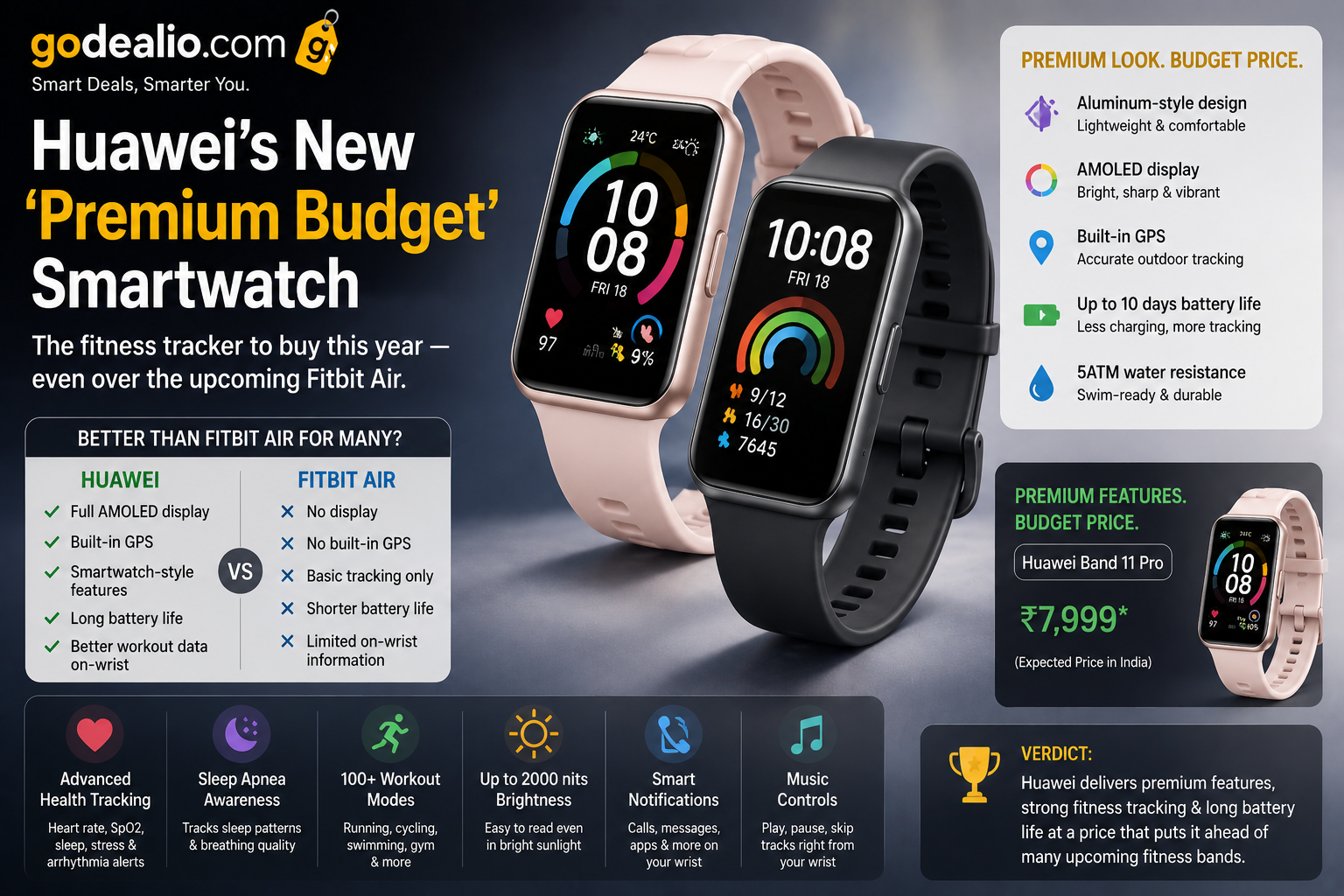
Huawei’s new premium-budget fitness wearable is quickly becoming one of the most interesting fitness trackers of 2026. With a bright AMOLED display, onboard GPS, advanced health tracking, and multi-day battery life, it may offer better overall value than the upcoming Fitbit Air for users who still want a screen and smartwatch-style experience.
Brand
Huawei
Model
Huawei Band 11 Pro / Watch Fit Series
Launch Status
Official
Availability
Global markets expanding
Rating
8.9
Specification Highlights
Label
Display
Value
AMOLED Display
Label
Brightness
Value
Up to 2000 nits
Label
GPS
Value
Built-in GPS
Label
Battery
Value
Up to 10 days
Label
Health Features
Value
Sleep apnea & arrhythmia tracking
Label
Build
Value
Premium aluminum-style design
Label
Water Resistance
Value
5ATM
Pros
- Premium aluminum-style design
- Bright AMOLED display
- Built-in GPS included
- Excellent battery life
- Advanced health tracking features
- Great value for money
- Works well for fitness-focused users
Cons
- Limited third-party app ecosystem
- No Wear OS support
- NFC and payment support may vary by region
- Some smart features are simpler than Apple or Samsung watches
Final Verdict
Huawei’s latest premium-budget smartwatch may end up being the best fitness tracker for users who want real smartwatch functionality without flagship pricing. Compared to the upcoming Fitbit Air, Huawei’s wearable offers a more traditional smartwatch experience with a display, GPS, and stronger battery life.
Huawei Is Targeting the Premium Budget Fitness Market
Huawei’s latest wearable is aiming directly at users who want a premium fitness tracker without paying flagship smartwatch prices.
The company appears focused on combining premium design, long battery life, built-in GPS, and useful health tracking features into a more affordable package.
That combination could make it one of the strongest fitness tracker options of 2026.
Why This Watch Is Getting Attention
Unlike many cheap fitness trackers, Huawei’s wearable does not look or feel overly budget-focused.
The AMOLED display, aluminum-style body, and premium finish make it look closer to a smartwatch than a basic fitness band.
At the same time, it still keeps the lighter feel and longer battery life that fitness tracker users often prefer.
- Premium-looking design
- Lightweight and comfortable
- Bright AMOLED display
- Long battery endurance
Why It Could Beat Fitbit Air for Many Users
The upcoming Fitbit Air is taking a screenless approach focused on simplicity and passive tracking.
Huawei’s wearable takes the opposite route by offering a full display, GPS, and smartwatch-style controls while still staying affordable.
For users who want visual workout data, notifications, maps, timers, or music controls directly on the wrist, Huawei’s device may feel far more practical.
- Includes a full display
- Built-in GPS support
- More smartwatch-like features
- Better for outdoor workouts
Fitness & Health Tracking Features
Huawei continues focusing heavily on health tracking.
The wearable includes advanced features such as heart-rate monitoring, blood oxygen tracking, sleep analysis, and possible arrhythmia detection.
Workout tracking is also expected to cover running, walking, cycling, swimming, and gym sessions.
- 24/7 heart-rate tracking
- Sleep tracking
- SpO2 monitoring
- Workout and recovery analysis
Battery Life Is a Major Advantage
Battery life remains one of Huawei’s biggest strengths in wearables.
The latest premium-budget model is expected to deliver several days of use on a single charge, even with health tracking enabled.
Compared to many Wear OS watches that require daily charging, Huawei’s wearable feels much more practical for long-term use.
AMOLED Display & Everyday Use
The bright AMOLED display makes the watch easier to use outdoors during workouts.
Notifications, workout stats, timers, and music controls are easier to access compared to screenless trackers.
This creates a more balanced experience between smartwatch convenience and fitness-tracker simplicity.
- Strong outdoor visibility
- Smooth animations
- Easy workout readability
- Useful smartwatch-style interface
What Huawei Still Lacks
Huawei’s wearable ecosystem is still more limited than Apple, Samsung, or Google.
Third-party app support remains weaker, and some smart features vary depending on region.
For users who mainly care about fitness and battery life, those limitations may not matter much.
Who Should Buy This Watch?
This wearable makes the most sense for users who want strong fitness tracking without expensive flagship smartwatch pricing.
It is especially attractive for Android users who prioritize battery life, comfort, and workout tracking over app ecosystems.
- Fitness-focused users
- Outdoor runners and walkers
- Users tired of daily charging
- People wanting premium design on a budget
The Wearable Market Is Splitting
The upcoming Fitbit Air shows that some brands believe users want smaller, distraction-free trackers.
Huawei is betting that users still want screens, smartwatch controls, and visual fitness data.
The wearable market in 2026 is increasingly splitting between minimal screenless trackers and affordable premium smartwatches.
Final Thoughts
Huawei’s latest premium-budget smartwatch looks like one of the strongest fitness-focused wearables of the year.
For users who still want a display, built-in GPS, and smartwatch-style convenience, it could end up being a better choice than the Fitbit Air.
The combination of battery life, premium design, and practical fitness features makes it a very competitive wearable in 2026.
FAQs
What makes Huawei’s new smartwatch special?
It combines premium design, AMOLED display, built-in GPS, long battery life, and advanced health tracking at a more affordable price.
How is it different from Fitbit Air?
Unlike the screenless Fitbit Air, Huawei’s wearable includes a full display, GPS, and smartwatch-style controls.
Is Huawei’s smartwatch good for fitness tracking?
Yes, it includes advanced health and workout tracking features such as heart-rate monitoring, sleep tracking, GPS, and SpO2 tracking.
Does the Huawei wearable support third-party apps?
Huawei’s app ecosystem is more limited compared to Apple Watch or Wear OS devices.
Who should buy this smartwatch?
It is ideal for users who want strong fitness tracking, long battery life, and premium design without paying flagship smartwatch prices.