
ASUS Pad India news: tandem OLED stands out, support lags
ASUS is back in India’s tablet conversation with a lightweight Android slate built around a 12.2-inch tandem OLED display, but software support is the main question buyers should watch.
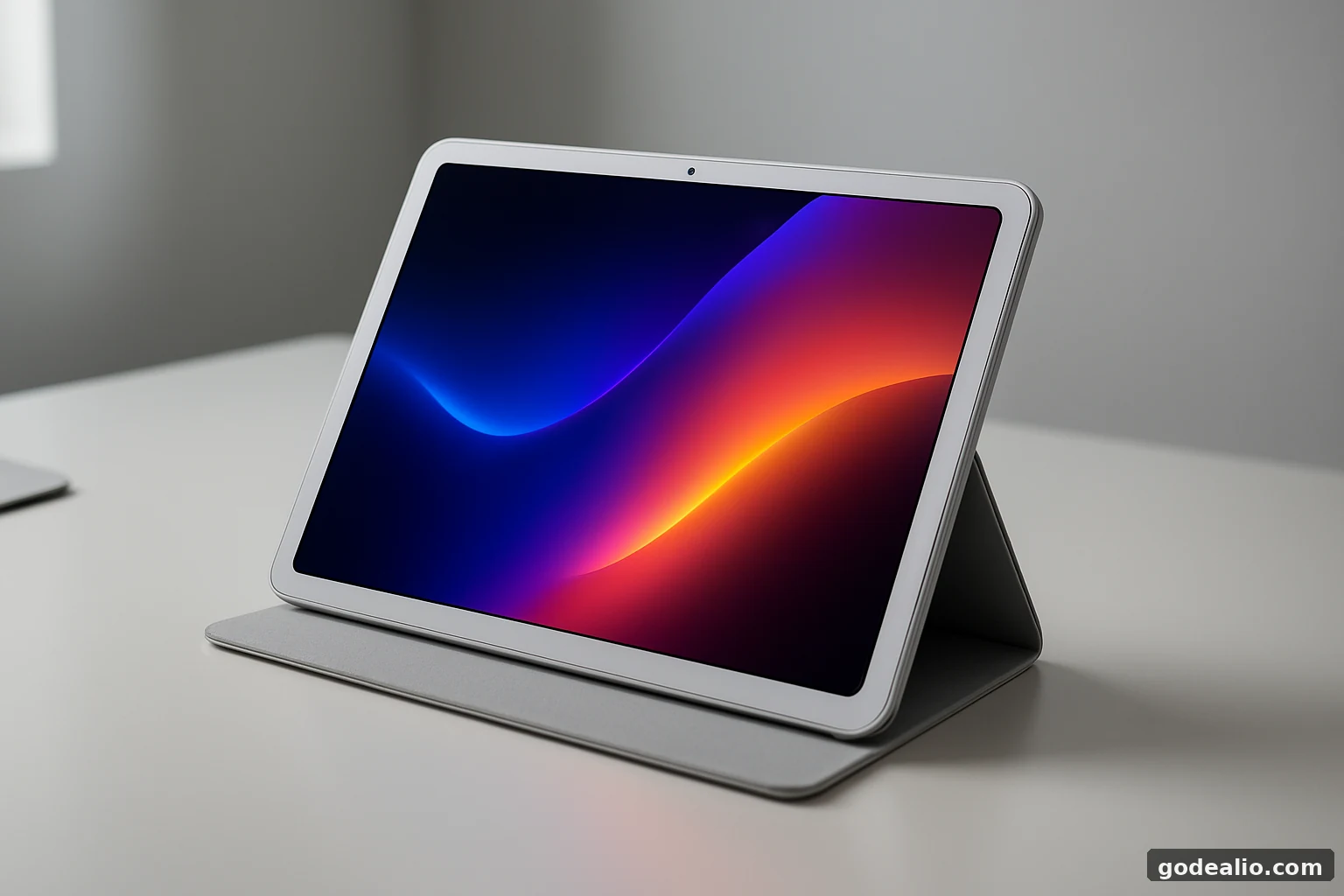
The ASUS Pad (T3201) returns to India with a 12.2-inch tandem OLED display, 144Hz refresh rate, Dimensity 8300 and reported pricing from INR 45,990. Its strengths are display quality, portability and media use, while the main buyer concern is the limited clarity around long-term software support.
Brand
ASUS
Model
T3201
Content Type
news
Launch Status
unknown
Availability
Reported on sale in India
Key News
Label
India pricing
Value
Reported at INR 45,990 for the 128GB model and INR 49,999 for the 256GB model
Verification Status
reported
Label
Display
Value
12.2-inch tandem OLED panel with 2.8K resolution and 144Hz refresh rate
Verification Status
reported
Label
Processor
Value
MediaTek Dimensity 8300 with 8GB LPDDR5X RAM and UFS 3.1 storage
Verification Status
reported
Label
Software
Value
Android 16 is reported out of the box, with three years of security updates mentioned and no clear OS upgrade roadmap
Verification Status
reported
Label
Connectivity
Value
Wi-Fi 6E and Bluetooth 5.3 are listed, with the tablet described as Wi-Fi only
Verification Status
reported
Specification Highlights
Label
Display size
Value
12.2 inches
Verification Status
reported
Label
Display type
Value
Tandem OLED
Verification Status
reported
Label
Resolution
Value
2.8K
Verification Status
reported
Label
Refresh rate
Value
144Hz
Verification Status
reported
Label
Chipset
Value
MediaTek Dimensity 8300
Verification Status
reported
Label
RAM
Value
8GB LPDDR5X
Verification Status
reported
Label
Storage
Value
UFS 3.1, with microSD expansion up to 1TB
Verification Status
reported
Label
Battery and charging
Value
45W charging adapter included; battery capacity is not specified in the supplied material
Verification Status
reported
Confirmed Details
- Model name: ASUS Pad (T3201)
- Reported Android 16 software out of the box
- 12.2-inch tandem OLED display with 2.8K resolution
- 144Hz refresh rate and 3:2 aspect ratio
- Quad speakers with Dolby Atmos support
- 13MP rear camera and 5MP front camera
- Wi-Fi 6E and Bluetooth 5.3
- USB 3.0 Type-C port with DisplayPort 1.4 and PD 3.0 support
- Included 45W charger, Type-C cable and transparent folio case
- microSD card slot with support for expansion up to 1TB
Unconfirmed Details
- A full OS upgrade policy is not clearly stated in the available material.
- The broader India retail rollout and channel availability are not fully detailed.
- Only the white colour option is described in the supplied evidence.
- No cellular variant, keyboard bundle or stylus bundle is confirmed in the supplied material.
What happened with the ASUS Pad
ASUS has pushed the Pad (T3201) back into India’s tablet spotlight after a long gap, and the timing matters. Tablets are becoming more relevant again for Indian buyers who want a larger screen for reading, streaming, note-taking and light productivity without paying laptop prices, especially as higher RAM and storage costs have made some notebooks harder to justify as a second device.
The ASUS Pad is being positioned as a premium Android tablet with a clear focus on display quality and portability. On paper, it combines a tandem OLED panel, a slim chassis, bundled accessories and a fairly clean software approach. That makes it a practical news item for Indian shoppers who have been waiting for an alternative to the more common IPS-based tablets in this segment.
Key details that are already clear
The most important confirmed or reported details are straightforward. The ASUS Pad carries a 12.2-inch tandem OLED display with 2.8K resolution and a 144Hz refresh rate. The panel is also described with a 3:2 aspect ratio, a 92% screen-to-body ratio, typical brightness of 600 nits and peak brightness of 2000 nits, plus TÜV Rheinland low-flicker and low-blue-light certification.
That display specification alone puts the tablet into a narrow group of Android devices that are trying to compete on visual quality rather than just raw performance. The tablet also includes quad speakers with Dolby Atmos support, which suggests ASUS is aiming for a stronger media experience than the usual budget or mid-range tablet formula. For Indian buyers who watch a lot of video, read long articles or use split-screen apps, that combination is the headline feature set.
Design and build are about portability first
The design story leans heavily towards portability. The ASUS Pad is said to weigh 523g and measure 6.5mm thick, which makes it lighter than many similarly sized tablets that cross the 600g mark. ASUS has also chosen a plastic build rather than an all-metal body, and while that may not sound as premium, it is a sensible compromise if the goal is to keep the device comfortable in hand for long reading sessions or travel use.
The included transparent folio case is a useful addition because it doubles as a stand, which makes the tablet easier to use on a desk, on a tray table or at home without needing a separate accessory. The port selection is also practical for a tablet: there is a microSD card slot, a USB 3.0 Type-C port with DisplayPort 1.4 and PD 3.0 support, plus power, volume and microphone placement that should keep the device simple to handle in portrait or landscape use.
Software and performance leave room for caution
This is where the ASUS Pad becomes less straightforward. The tablet is reported to ship with Android 16 out of the box, which is a strong starting point, but the software commitment appears limited in the available material. ASUS is said to be offering three years of security updates, while a full OS upgrade roadmap is not clearly stated. For a device close to the INR 50,000 mark, that leaves a meaningful question for buyers who expect a longer support cycle.
Under the hood, the tablet uses the MediaTek Dimensity 8300 with 8GB of LPDDR5X RAM and UFS 3.1 storage. That is enough for mainstream multitasking, streaming, browsing and everyday productivity, but it is not a flagship-class platform. The storage can be expanded through microSD up to 1TB, yet the RAM ceiling remains unchanged across the reported 128GB and 256GB variants. Indian users who keep tablets for several years may want to think carefully about that balance.
Why the display and speakers matter most
The ASUS Pad’s value proposition is much stronger if your priorities are entertainment, reading and casual creation rather than heavy desktop-style workflows. The 3:2 display shape gives more vertical space than a typical widescreen tablet panel, which can make documents, articles and note-taking feel less cramped. On the media side, the reported OLED panel should deliver the deep blacks and high contrast that many IPS tablets cannot match, especially when watching films or series at night.
The audio setup is just as important. Quad speakers with Dolby Atmos are a real advantage for a tablet of this size, because they reduce the need for an external speaker in many use cases. For Indian buyers who want a tablet for family streaming, travel entertainment or a larger screen for casual gaming, the display-and-sound combination is the clearest reason to consider the ASUS Pad over more ordinary Android tablets.
Cameras and connectivity are functional, not flashy
The camera setup is basic but serviceable for a tablet. The ASUS Pad is listed with a 13MP rear camera and a 5MP front camera. That is enough for quick document capture, occasional scans and video calls, but it does not try to compete with a smartphone camera system. Buyers should treat the cameras as supporting hardware rather than a main reason to buy the tablet.
Connectivity is also practical rather than ambitious. The tablet supports Wi-Fi 6E and Bluetooth 5.3, and the available material describes it as Wi-Fi only. That means users who want mobile data built into the tablet do not appear to have that option in the currently described configuration. The included 45W charger, Type-C cable and protective folio case help the package feel complete from day one.
India price and value take the centre stage
Pricing is one of the main reasons the ASUS Pad is getting attention. The reported figures are INR 45,990 for the 128GB model and INR 49,999 for the 256GB model. That places the tablet in a premium zone for Indian buyers, where the most important comparison is not just the hardware on paper but also how long the device will remain useful and supported.
The 256GB model gives extra internal storage, but it does not increase RAM, so buyers should not expect a major performance jump between the two. If your use case is mostly reading, streaming, note-taking, browsing and light office work, the lower storage model may be enough. If you plan to keep large offline media libraries or documents locally, the higher storage variant makes more sense. Either way, the microSD slot adds flexibility, though it is not a substitute for more memory.
What remains unknown, and who should wait
There are still several details Indian buyers will want before making a purchase decision. The supplied material does not clearly spell out a full OS upgrade policy, and it does not confirm whether the tablet will receive the kind of long-term software treatment that has become common on higher-end devices from other brands. It also does not detail regional colour options beyond white, or the wider accessory ecosystem around the tablet.
That means the ASUS Pad is best viewed as a strong hardware-first entry with a few caveats rather than a fully settled long-term buy. If you want a tablet mainly for display quality, media, portability and a clean Android base, it looks interesting. If you care more about maximum longevity, heavy multitasking or a richer tablet software roadmap, it may be worth waiting for clearer India-side support details before buying.
Final takeaway for Indian buyers
The ASUS Pad makes a strong first impression because it understands what many tablet buyers actually want in 2026: a good screen, light weight, useful speakers and simple day-to-day usability. Those strengths are easy to see in the reported specifications, and they give ASUS a credible reason to re-enter a market that has become more competitive in recent years.
At the same time, the tablet is not a no-compromise option. The software support story is still too thin, the chip is solid rather than standout, and the broader tablet ecosystem around the device is not yet fully described. For Indian buyers, that means the ASUS Pad is best approached as a promising media-and-productivity tablet with clear strengths, not as an automatic buy for those seeking the longest possible lifespan.
FAQs
What is the ASUS Pad’s main selling point for Indian buyers?
Its biggest draw is the reported 12.2-inch tandem OLED display with 2.8K resolution and 144Hz refresh rate. That should make it especially appealing for media, reading and casual productivity. The lightweight design and quad speakers add to the appeal.
Is the ASUS Pad suitable for long-term use?
It could be, but the software support story is not fully clear yet. The available material mentions three years of security updates, but it does not lay out a full OS upgrade policy. Buyers who keep tablets for many years should factor that in before paying around INR 50,000.
Does the ASUS Pad have strong performance on paper?
It uses the MediaTek Dimensity 8300 with 8GB of LPDDR5X RAM and UFS 3.1 storage, which should be fine for everyday use, streaming and light multitasking. It is not positioned as a flagship performance tablet, so heavy editing or demanding workloads may be better handled by more powerful devices.
What should I know about the India price?
The reported prices are INR 45,990 for the 128GB model and INR 49,999 for the 256GB model. The extra money gets you more storage, not more RAM, so the better value depends on whether you need more local space or simply want the lower entry price.