
Acer MP340 music player powers on after more than a decade in storage
A garage find shows that some older portable audio gear can still wake up after years of neglect, but it remains a single anecdote rather than a durability benchmark.
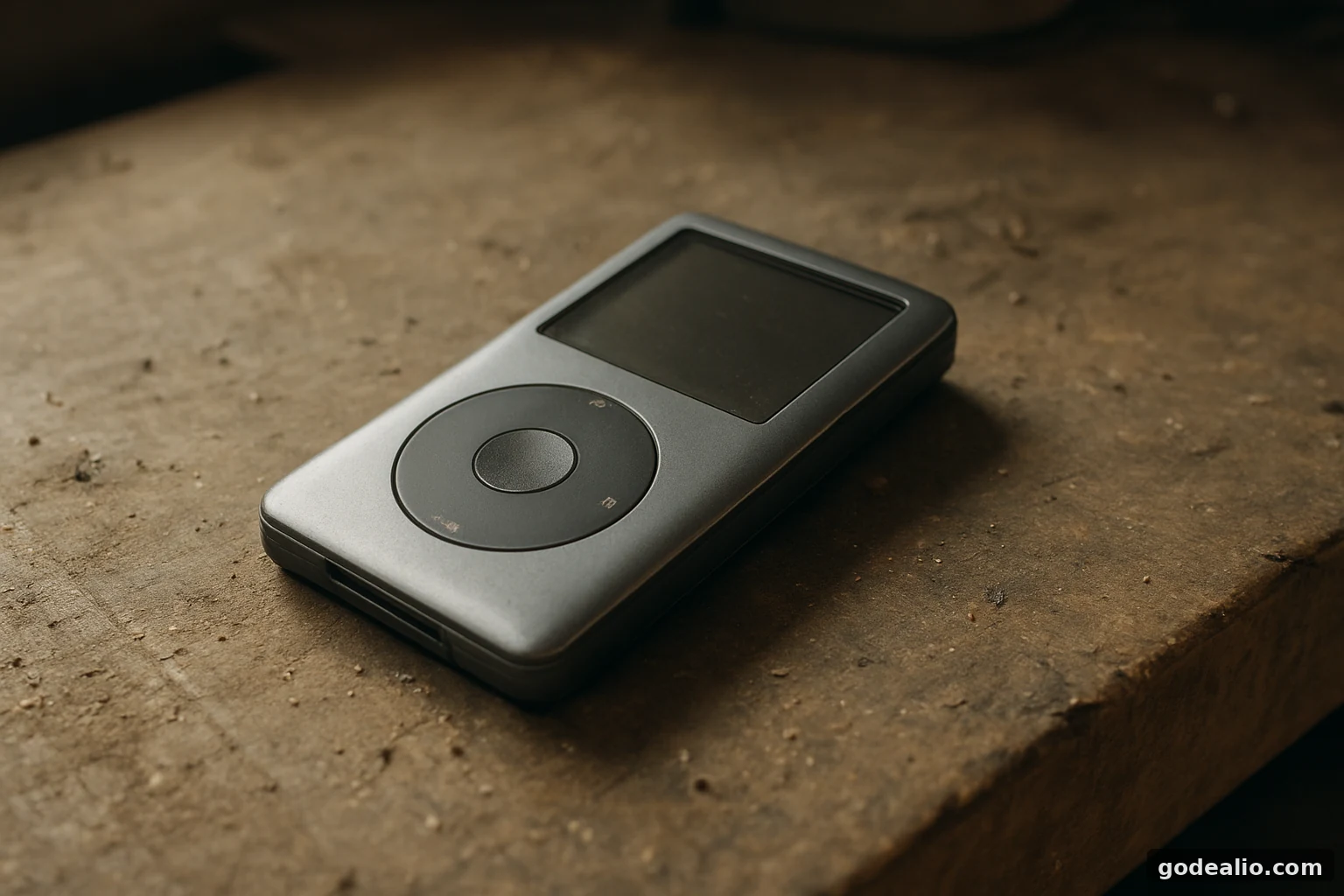
An Acer MP340 portable music player, launched in 2006, reportedly switched on after sitting unused in a garage for more than a decade. The story is a useful reminder of how much portable audio has changed, while also showing why one working device is not proof that every old player will survive the same treatment.
Brand
Acer
Model
MP340
Content Type
news
Launch Status
unknown
Availability
Legacy device; not a current retail launch.
Key News
Label
Main development
Value
An Acer MP340 portable music player reportedly switched on on the first attempt after more than a decade in garage storage.
Verification Status
reported
Label
Historic device
Value
The player dates to 2006 and came with a 1.8-inch display, 20GB storage and SD card expansion.
Verification Status
confirmed
Label
Market takeaway
Value
The anecdote highlights how dedicated music players have shifted from mass-market gadgets to more niche audio devices.
Verification Status
reported
Specification Highlights
Label
Display
Value
1.8-inch TFT, 160 x 128 resolution
Verification Status
confirmed
Label
Storage
Value
20GB onboard storage
Verification Status
confirmed
Label
Expansion
Value
SD card support
Verification Status
confirmed
Label
Battery life claim
Value
10 hours with screen off; about 3 to 5 hours with screen on
Verification Status
confirmed
Label
Extra features
Value
Two headphone jacks, voice recording, photo playback, H.264 video playback and Sudoku
Verification Status
confirmed
Confirmed Details
- The device identified in the story is the Acer MP340, a portable music player from 2006.
- It had a 1.8-inch TFT screen with 160 x 128 resolution.
- It offered 20GB of storage and could be expanded using an SD card.
- It included two headphone jacks, voice recording, photo viewing, H.264 video playback and built-in Sudoku.
- Its quoted battery life was 10 hours with the screen off and about 3 to 5 hours with the screen on.
Unconfirmed Details
- It is not confirmed whether the battery inside the unit is original or has been replaced.
- It is not confirmed whether the player was ever charged intermittently while it sat in storage.
- There is no controlled comparison showing whether other units of the same model would behave the same way.
- No India-specific launch, pricing or current retail availability information is provided for this legacy device.
What happened to the forgotten MP3 player
An Acer MP340 portable music player, left unused in a garage lock-up for more than a decade, reportedly switched on the first time it was tried again. The device had been sitting among household items and old paperwork rather than being kept in active use, which makes the result feel more surprising than a normal power-up.
That surprise is exactly why the story landed. A lot of old electronics become permanently unusable after long storage, especially if batteries fail or moving parts seize up. In this case, the device came back to life without any obvious drama, but that should be read as an interesting anecdote, not as proof that all vintage MP3 players are equally resilient.
The device details that are actually confirmed
The player in question is an Acer MP340, a model that dates back to 2006. It reflects the era before streaming became the default way most people listened to music on the move, when downloads and local file collections were still central to portable audio.
Its confirmed hardware list is a time capsule. The MP340 had a 1.8-inch TFT display with a 160 x 128 resolution, 20GB of storage, SD card expansion, two headphone jacks for sharing, voice recording, photo viewing, H.264 video playback and even a built-in Sudoku game. Those features may look quaint now, but they were practical selling points in the mid-2000s.
Why this small survival story stands out
What makes the episode notable is not nostalgia for its own sake. It is the fact that the player sat unused for such a long period and still responded on the first attempt. Batteries usually age even when a device is idle, and long storage often exposes weaknesses in both power cells and internal components.
At the same time, one working unit does not tell the full story about the entire product category. Storage conditions matter. Heat, humidity, dust and the way a device was put away all affect long-term reliability. A garage can be a brutal place for electronics, but in some cases it can also be a quiet place where a device simply waits without being handled, knocked around or repeatedly drained.
Battery life and storage show how much the category has changed
The MP340's quoted battery life was 10 hours, but that was with the screen turned off. With the display active, the runtime dropped to roughly 3 to 5 hours. That may have been acceptable for a device of its time, but it falls far short of what many buyers now expect from a portable player that may also need to handle Bluetooth, album art and on-device navigation.
Storage expectations have changed even more. Early portable players were built around owned files and on-board storage. As high-resolution downloads became more common, file sizes grew and the need for larger capacity followed. Modern players often use flash memory and microSD expansion rather than hard-drive-style storage, and some support cards up to 2TB. The category has moved from basic file playback to far more serious library management.
Why dedicated music players had to justify themselves again
Streaming and smartphones changed the rules. Once a phone could play downloaded tracks, stream music, hold playlists and pair with wireless headphones, a separate music player could no longer win by being a simple music box. It needed a clearer reason to exist.
That is why the surviving part of the market now looks more specialised. Dedicated players tend to appeal to listeners who care about local storage, sound quality, wired headphone support and a more focused user experience. Cheaper models lost much of their appeal because a phone already covers basic playback for most people.
What Indian buyers can take from this
For Indian readers, the practical lesson is about use case rather than nostalgia. If you still keep music locally, travel often or want offline playback without depending on mobile data, a dedicated player can still make sense. That is especially true if you prefer wired headphones or want a device that is built around music rather than multitasking.
The story also highlights a buying point that matters everywhere, including India: serviceability. If you are considering any music-focused device, think beyond headline storage or design. Ask how the battery ages, whether it can be replaced, and whether the device will still be useful after long periods in a drawer. There is no confirmed India price for this old Acer model, so this is less about buying the MP340 and more about learning what to look for in modern alternatives.
What still is not known
There are important gaps in the story. It is not confirmed whether the battery inside the player is original, whether it was ever replaced, or whether the unit was charged at intervals while it was stored. Those details matter because battery condition is usually the first point of failure in older electronics.
There is also no controlled comparison against other players from the same generation. So while the result is impressive, it should not be turned into a blanket claim that all mid-2000s music players were built in exactly the same way. The safest reading is straightforward: this particular unit survived a long idle period and powered on again.
The simple takeaway for readers
The deeper value of the story is that it shows how portable audio has evolved. An old Acer MP340 could still surprise its owner after more than a decade in storage, but today’s buyers are looking at a very different category. The question is no longer just whether a music player works. It is whether it still offers enough reason to exist alongside the smartphone in your pocket.
For Indian buyers, that means choosing with intent. Buy a dedicated player if you care about offline libraries, better wired listening or a focused music-first device. Do not buy one expecting every forgotten unit to behave like this MP340 did. The right lesson is caution, not nostalgia.
FAQs
What exactly switched on after years in storage?
It was an Acer MP340 portable music player from the mid-2000s. The device reportedly powered on on the first attempt after sitting unused in a garage for more than a decade.
Does this prove old MP3 players were better built than new ones?
No. It proves that one specific unit survived a long idle period and still worked. Durability depends on many factors, including storage conditions, battery age and how often the device was used.
What were the Acer MP340's main features?
Confirmed features include a 1.8-inch 160 x 128 TFT display, 20GB of storage, SD card expansion, two headphone jacks, voice recording, photo viewing, H.264 video playback and built-in Sudoku.
Should Indian buyers still consider dedicated music players?
Yes, if they want offline playback, local music libraries, wired headphone support or a music-first interface. For casual listening, a smartphone may already be enough, so the choice depends on how serious your listening needs are.