
10,000-Nit Smartphone Display Claims Explained: Why Bigger Numbers Don't Always Mean Better Screens
Rumors of a smartphone featuring a 10,000-nit display have sparked excitement, but peak brightness numbers alone rarely tell the complete story about real-world screen quality.
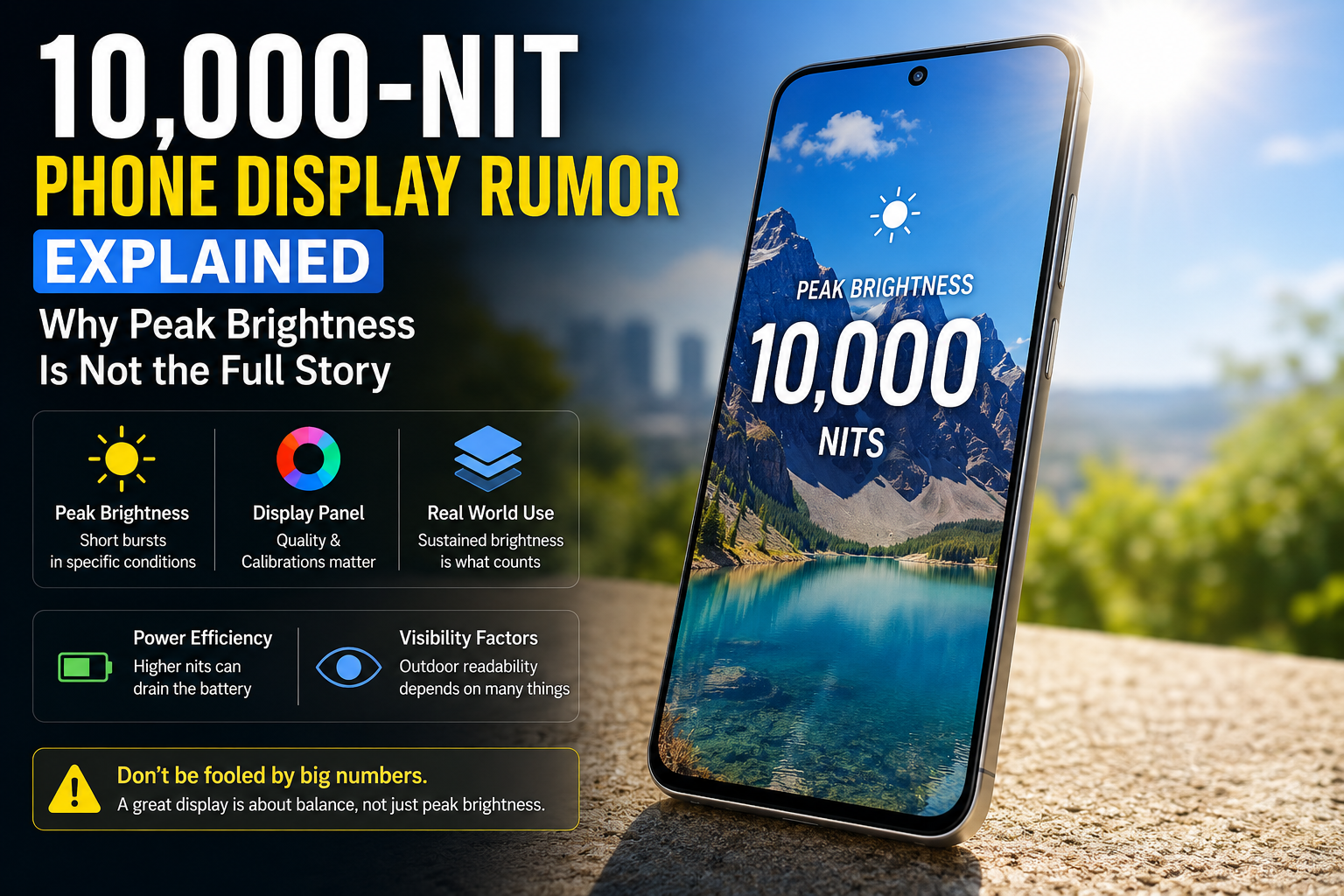
A new smartphone rumor suggests that an upcoming HONOR device could feature a display capable of reaching an astonishing 10,000 nits of peak brightness. While the headline number sounds impressive, display experts caution that peak brightness measurements often represent small portions of the screen under specific testing conditions rather than everyday usage. Real-world visibility depends on multiple factors including full-screen brightness, anti-reflective coatings, color accuracy, thermal management, HDR performance and display tuning. As manufacturers increasingly compete using eye-catching specifications, consumers should understand what brightness numbers actually mean before using them as a primary buying factor.
Brand
HONOR
Model
Upcoming 10,000-Nit Smartphone
Topic
Display Technology
Content Type
news
Launch Status
Rumored
Availability
Expected China Launch
Rating
8.8
Pros
- Potentially record-breaking brightness levels
- Improved HDR viewing experience
- Better visibility under direct sunlight
- Demonstrates rapid display innovation
- Could improve outdoor usability
- Highlights OLED display advancements
Cons
- Peak brightness may only apply to small screen areas
- Marketing numbers can be misleading
- Higher brightness may increase heat generation
- Potential impact on battery consumption
- Real-world performance remains unverified
Final Verdict
A 10,000-nit display headline certainly attracts attention, but buyers should focus on sustained brightness, outdoor readability and overall display quality rather than a single peak brightness figure. The best smartphone displays balance brightness, efficiency, color accuracy and thermal performance together.
The 10,000-Nit Display Rumor Explained
Recent industry reports suggest an upcoming HONOR smartphone could feature a display capable of reaching 10,000 nits of peak brightness.
If accurate, the figure would place the device among the brightest smartphone displays ever announced.
However, understanding how brightness measurements are calculated is essential before drawing conclusions.
What Does 'Nit' Actually Mean?
A nit is a unit used to measure screen brightness.
Higher nit values generally indicate a brighter display capable of producing more light.
Brightness plays a major role in outdoor visibility, HDR content playback and overall viewing comfort.
- 1 nit equals 1 candela per square meter
- Higher values improve visibility
- Important for outdoor use
- Affects HDR performance
- Influences display readability
Peak Brightness vs Real-World Brightness
One of the biggest misunderstandings in smartphone marketing is the difference between peak brightness and sustained brightness.
Peak brightness is usually measured on a very small portion of the screen for a short duration under controlled conditions.
Most users rarely experience these maximum brightness levels during everyday use.
- Peak brightness is temporary
- Measured in specific scenarios
- Usually affects small screen areas
- Not representative of full-screen usage
- Sustained brightness matters more
Why Outdoor Visibility Depends on More Than Brightness
Many buyers assume higher nit numbers automatically guarantee better outdoor visibility.
In reality, display reflections, panel coatings, software tuning and color calibration often matter just as much.
A well-tuned 2,500-nit display can sometimes outperform a poorly optimized display with a much higher peak rating.
Higher Brightness Creates New Challenges
Generating extreme brightness levels requires significant power.
Manufacturers must carefully manage heat, battery consumption and long-term panel durability.
Without effective thermal control, ultra-bright displays may reduce performance or brightness after extended use.
- Higher power consumption
- Increased thermal output
- Potential battery impact
- Display longevity concerns
- Thermal throttling risks
Where 10,000 Nits Could Actually Matter
Peak brightness measurements are most relevant for HDR content.
When viewing HDR movies and videos, certain highlights such as sunlight, reflections and explosions can appear more realistic.
This is one area where extremely high brightness levels can offer genuine visual benefits.
The Smartphone Brightness Race Continues
Manufacturers have increasingly used display brightness as a competitive marketing metric.
Over the past few years flagship devices have moved from around 1,000 nits to several thousand nits.
The rumored 10,000-nit milestone represents another step in that trend.
- Display competition is intensifying
- HDR is becoming more important
- Outdoor performance is a priority
- Marketing focuses on measurable numbers
- Consumers need better context
What Buyers Should Look For Instead
Instead of focusing only on peak brightness figures, buyers should evaluate overall display quality.
Factors such as color accuracy, refresh rate, PWM dimming, anti-reflective coatings and sustained brightness often have a larger impact on everyday satisfaction.
- Sustained brightness
- Outdoor readability
- Color accuracy
- Refresh rate
- Display efficiency
- HDR quality
- Thermal performance
- Battery life
What We Know About the Rumored HONOR Device
Current information remains based on industry leaks and reports.
The phone is expected to launch first in China before wider availability decisions are announced.
Official specifications have not yet been confirmed by HONOR.
Display Quality Is More Than a Single Number
The rumored 10,000-nit display demonstrates how quickly smartphone technology continues advancing.
However, buyers should avoid judging a display based solely on its headline brightness figure.
The best smartphone screens combine brightness, efficiency, color quality and usability into a balanced overall experience.
FAQs
What is a 10,000-nit display?
It refers to a screen capable of reaching up to 10,000 nits of peak brightness under specific conditions.
Does 10,000 nits mean the entire screen reaches that brightness?
Usually not. Peak brightness is often measured on a small portion of the display for a short duration.
Why is peak brightness different from sustained brightness?
Peak brightness represents short bursts, while sustained brightness reflects what users experience during longer viewing sessions.
Will a 10,000-nit display improve outdoor visibility?
Potentially, but outdoor readability also depends on anti-reflective coatings, display tuning and ambient lighting conditions.
Does higher brightness affect battery life?
Yes. Extremely bright displays typically consume more power and generate more heat.
Has HONOR officially confirmed the 10,000-nit display?
At the moment, the information is based on reports and rumors rather than official confirmation.