
Snapdragon vs MediaTek: Which Processor Should You Buy in 2026?
A practical India-focused guide to choosing by exact chipset, phone implementation and workload instead of processor brand alone.
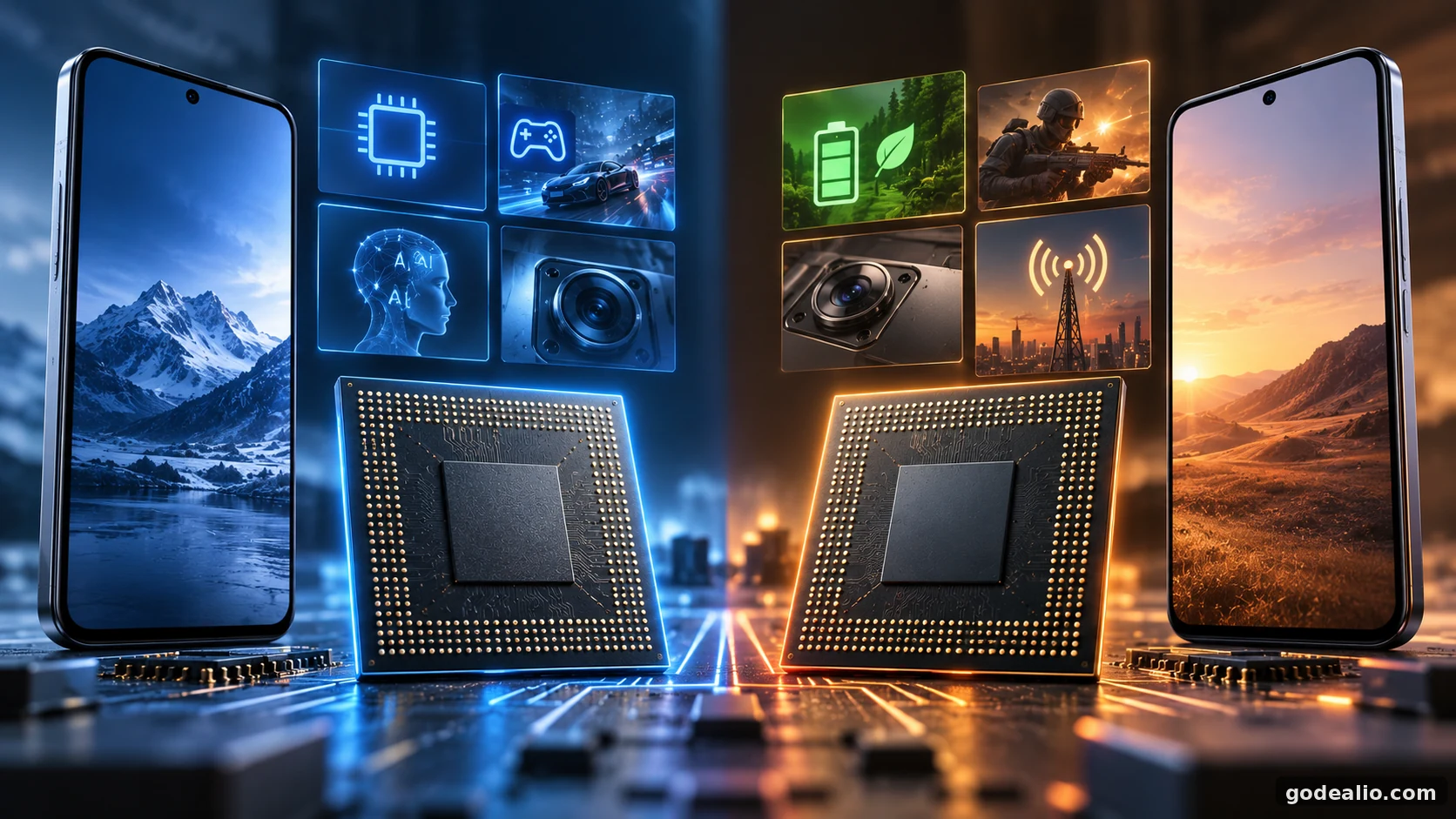
Snapdragon and MediaTek both offer capable smartphone processors across multiple tiers in 2026, so the better choice depends on the exact chipset and phone rather than the brand name alone. This guide shows Indian buyers how to compare CPU and GPU performance, sustained gaming, efficiency, cameras, connectivity and software support before choosing a phone.
Quick Verdict
Guide Overview
- Guide type
- explainer
- Difficulty
- beginner
- Market
- India
- Time required
- About 15–30 minutes to compare two phones when specifications and comparable tests are available.
- Cost estimate
- No fixed cost estimate; verify current India pricing before purchase.
Who this guide is for
Indian smartphone buyers comparing Snapdragon- and MediaTek-powered Android phones in 2026.
Before You Start
Requirements
- Exact smartphone models
- Exact chipset names
- Official chipset and phone specifications
- Comparable exact-device tests for sustained performance, battery or cameras
Prerequisites
- Compare broadly similar performance tiers.
- Treat vendor percentages as manufacturer claims unless independently verified.
- Remember that cooling, battery, display, memory, storage and software affect phone-level results.
Tools Needed
- Official smartphone product page
- Official Qualcomm or MediaTek chipset page
- Comparable exact-device tests
Step-by-Step Guide
Follow the relevant steps in order and avoid changing unrelated advanced settings.
Identify the exact processors
- Record the complete chipset name in each phone.
- Confirm it from reliable product documentation.
Expected result
You have two exact phone-and-chipset combinations.
Warning
Do not compare brand names alone.
Platform: Android
Match the performance tier
- Check whether both processors target broadly comparable tiers.
- If not, treat the exercise as a phone-value comparison rather than a processor-brand verdict.
Expected result
You know whether the comparison is broadly like-for-like.
Platform: Android
Compare CPU evidence
- Use comparable benchmark generations.
- Separate single-core, multi-core and sustained behaviour.
Expected result
You understand the CPU evidence relevant to your workload.
Warning
Vendor generational percentages are not direct cross-brand results.
Platform: Android
Compare GPU and gaming
- Check the exact GPU.
- Use sustained exact-phone gaming tests for games you care about.
Expected result
Gaming is judged at phone level.
Warning
Do not assume one GPU family wins every game.
Platform: Android
Check efficiency and thermals
- Use comparable battery and sustained-load tests.
- Consider display, battery capacity and software alongside processor efficiency.
Expected result
You understand sustained behaviour and endurance.
Warning
Chipset efficiency claims do not establish complete-phone battery life.
Platform: Android
Check cameras at phone level
- Verify chipset imaging capabilities.
- Compare real images and videos from the exact phones.
Expected result
Camera quality is not inferred from processor branding.
Platform: Android
Check connectivity and software
- Verify phone-level 5G, Wi-Fi and Bluetooth features.
- Check the phone maker's update policy.
Expected result
Connectivity and longevity are included in the decision.
Platform: Android
Compare the complete phones
- Compare display, battery, charging, cameras, storage, memory and cooling.
- Verify current India pricing before judging value.
Expected result
Your choice is based on the complete device.
Platform: Android
Quick answer: Snapdragon or MediaTek in 2026?
Neither processor brand is automatically the better buy across every smartphone tier in 2026. Qualcomm's Snapdragon 8 Elite Gen 5 and MediaTek's Dimensity 9500 are both high-end platforms with modern CPU, GPU, AI, imaging and connectivity capabilities. A useful comparison therefore starts with the exact chipset and the exact phone, not the logo. For Indian buyers, gaming should be judged with GPU and sustained exact-device tests; battery life with complete-phone endurance tests; and cameras with actual image and video output. Current India pricing must also be verified before making a value judgement.
Why processor brand alone is not enough
Snapdragon and MediaTek are families containing products for different tiers. Comparing a flagship from one vendor with a mid-range product from the other does not establish which company is better overall. Even within a family, CPU, GPU, modem, memory and imaging capabilities can change substantially by generation and model. The finished smartphone matters just as much. Cooling, power limits, RAM, storage, display resolution, battery capacity and software can alter sustained speed, efficiency and responsiveness. Treat chipset specifications as platform capabilities rather than guaranteed phone outcomes.
What the current flagship platforms show
Qualcomm's Snapdragon 8 Elite Gen 5 uses the third-generation Oryon CPU and Adreno GPU. Qualcomm reports generational gains in CPU performance and efficiency, graphics performance and overall SoC power use. The platform also includes Hexagon AI processing, Spectra imaging technology and the X85 5G Modem-RF system. MediaTek's Dimensity 9500 uses a third-generation All Big Core CPU design, Arm Mali-G1 Ultra GPU and NPU 990. MediaTek reports generational gains in CPU and GPU performance and power efficiency. These percentages use each vendor's own predecessor and methodology, so they must not be treated as direct cross-brand benchmark results.
Which should gamers choose?
Start with the exact GPU and the games you play. Snapdragon platforms use Qualcomm Adreno graphics, while current Dimensity platforms use Arm GPU designs. Both current flagship families advertise advanced gaming features, including modern graphics APIs and ray-tracing capabilities. Do not assume Adreno or Arm graphics universally wins. Check sustained frame rate, frame-time stability, graphics settings, power draw and temperature on the exact phone. A short benchmark can show peak capability but may not reveal behaviour after a long session. Game optimisation should also be demonstrated for the title and device rather than assumed from the chipset brand.
Which is better for battery life and efficiency?
There is no reliable brand-wide battery winner. Qualcomm reports substantial efficiency improvements for Snapdragon 8 Elite Gen 5, while MediaTek makes strong efficiency claims for Dimensity 9500 and Dimensity 8400. These are manufacturer-reported generational claims, not complete-phone battery tests. Real endurance also depends on display power, battery capacity, modem conditions, background software and the phone maker's performance policy. Battery-first buyers should therefore use comparable exact-phone endurance tests rather than assuming Snapdragon or MediaTek will always last longer.
Snapdragon vs MediaTek for camera and video
Both vendors integrate advanced imaging hardware. Qualcomm highlights Spectra ISP capabilities on Snapdragon 8 Elite Gen 5, while MediaTek's Dimensity 9500 includes its Imagiq imaging system and advanced video capabilities. The processor cannot guarantee final image quality. Phone makers choose sensors, lenses, stabilisation, HDR processing, noise reduction and camera tuning. For a camera-first purchase, confirm that the chipset supports the required feature, then compare real photos and videos from the exact phones under comparable conditions.
AI, 5G, Wi-Fi and connectivity
Modern Snapdragon and Dimensity platforms integrate AI accelerators, cellular modems and wireless features alongside CPU and GPU hardware. Snapdragon 8 Elite Gen 5 includes Qualcomm's Hexagon AI processing and X85 modem platform; Dimensity 9500 includes MediaTek's NPU 990 and integrated 5G capabilities. A chipset maximum does not mean every smartphone exposes every feature. Antenna design, regional network support, Wi-Fi implementation and software matter. The same applies to AI: NPU capability is only useful when the phone maker and applications expose features that benefit the buyer.
Software support can matter more than a small processor gap
A fast processor can remain capable for years, but long-term ownership depends heavily on the smartphone maker's update policy. Android upgrades, security patches and feature support are delivered through the complete device ecosystem. Do not assume Snapdragon automatically receives longer support than MediaTek or vice versa. Check the documented policy for the exact model. If two phones are close in performance, update duration, storage, battery and camera quality can reasonably become more important than a small chipset difference.
Choose by use case, not processor loyalty
Heavy gamers should prioritise exact GPU performance, sustained frame rates and cooling. Everyday users should also consider storage speed, memory, display and software. Battery-first buyers need phone-level endurance evidence, while camera buyers should inspect real image and video results rather than relying on ISP branding. This method may lead to Snapdragon in one price tier and MediaTek in another. That is normal. Processor competition changes by generation, and buying guidance should follow current evidence instead of preserving a permanent brand hierarchy.
Common comparison mistakes
The biggest mistake is turning one successful chipset into a verdict on an entire company. Another is placing vendor percentage improvements side by side as though they came from one independent test; they normally use different predecessors and methodologies. Buyers also overvalue peak synthetic scores. Sustained gaming requires longer tests, battery life requires complete-device testing and camera quality requires actual photo and video evaluation. Avoid fixed price thresholds unless current India pricing and comparable devices support them.
Final buying rule for Indian buyers
Start with your workload and budget, shortlist actual phones available in India, and then compare their exact processors. Verify whether they target comparable tiers and use phone-level evidence for gaming, battery, thermals and cameras. Snapdragon and MediaTek both offer technically advanced platforms in 2026. If two phones are close in processor performance, let current price, RAM, storage, display, battery, charging, cameras, cooling, network support and software updates decide. The complete phone is what you buy and use, not the chipset badge.
How to read benchmark results without choosing the wrong phone
Synthetic benchmarks are useful when they answer a narrow question. CPU tests can compare defined workloads, while broader tests can expose differences in graphics, memory and other subsystems. Use the same benchmark generation, similar settings and comparable thermal conditions. A score from one benchmark should not be converted into another benchmark score, and results collected under substantially different conditions should not be treated as directly equivalent. For a Snapdragon vs MediaTek buying decision, use benchmarks as evidence rather than a verdict. A phone can post a strong short-run result and then reduce performance during a longer workload as heat builds. Another phone may begin slightly lower yet sustain more of its performance. Which behaviour matters more depends on whether you mainly browse, edit media, emulate games or play demanding titles for long sessions. Also check the exact phone configuration. Memory capacity, storage, software version and performance mode can affect results. Prefer reviews that disclose their methodology. The goal is not to collect the largest number; it is to understand whether the evidence represents the way you intend to use the phone.
Thermal design can change the result even with a powerful chipset
A mobile processor operates inside a small enclosure with strict temperature and power limits. During a short task, the phone may allow high CPU and GPU frequencies. During a longer game, camera session or intensive workload, heat can accumulate and the device may reduce power. Peak processor capability and sustained phone performance are therefore related but not identical. When comparing Snapdragon and MediaTek phones, look for sustained tests performed on the exact models. Useful evidence includes performance stability over time, frame-time behaviour during gaming and whether the device becomes uncomfortable to hold. Cooling hardware, internal layout, software power management and manufacturer tuning can all influence the outcome. Two phones using processors from a similar performance class can therefore behave differently after an extended workload. Ambient conditions can also affect thermal behaviour, so one review environment cannot predict every user result. Prefer transparent, repeatable testing and avoid turning one unusually hot or cool test into a permanent conclusion about an entire processor family.
RAM and storage can matter as much as a small processor difference
Processor comparisons often focus on CPU and GPU specifications, but the phone memory and storage configuration can influence everyday behaviour. Application loading, large-file transfers, multitasking and background app retention involve more than processor cores. A well-balanced phone with sufficient memory and capable storage can be more suitable than another model whose processor advantage is small but whose configuration is more restrictive. This matters when phones are sold in several RAM and storage variants. Verify the configuration attached to the price you are considering instead of assuming every variant offers the same value. Storage capacity also affects long-term usability for buyers who keep large games, offline video, photographs or documents. Once two chipsets are in a broadly similar performance class, evaluate the complete memory and storage package before paying extra for a modest processor difference. This does not mean RAM or storage makes a slower processor universally faster; it means complete-device balance is more useful than isolating one specification.
A practical Snapdragon vs MediaTek buying workflow for India
Start by setting a realistic budget and identifying phones actually available to you. Record the exact chipset, RAM and storage configuration of each shortlisted model. Remove comparisons that mix very different performance tiers unless the purpose is specifically to judge complete-phone value. Check official processor capabilities and smartphone specifications before looking at reviews. For gaming, move from specifications to sustained exact-device testing. For battery life, compare complete-phone endurance rather than processor efficiency claims alone. For cameras, use real photographs and video samples from the exact devices. For connectivity, confirm features implemented by the Indian phone variant rather than assuming every chipset capability is enabled. Finally, check the manufacturer documented software-update commitment. Only after those checks should current India pricing decide value. Discounts can change the relationship between two phones without changing either processor. This workflow prevents an old rule about Snapdragon or MediaTek from overriding better evidence from the actual devices available when you buy.
Troubleshooting
Reviews show different results for the same chipset
Likely causes
- Different phones
- Different benchmark versions
- Thermal state
- Software or performance modes
What to try
- Prefer comparable methods.
- Compare exact phones.
- Use multiple sustained tests.
When to escalate: Treat the comparison as inconclusive when methodology is unclear.
The faster benchmark phone has worse battery life
Likely causes
- Display power
- Battery capacity
- Radio conditions
- Software
- Power limits
What to try
- Use phone-level endurance tests.
- Separate chipset efficiency from complete-device endurance.
When to escalate: Do not infer processor efficiency from battery life alone.
A powerful phone slows during long gaming
Likely causes
- Thermal throttling
- Power limits
- Game optimisation
- Cooling design
What to try
- Check sustained game tests.
- Compare frame-rate stability over time.
When to escalate: Follow manufacturer support guidance for abnormal thermal warnings or shutdowns.
Buying & Decision Checklist
- Confirm exact chipset names.
- Compare similar tiers.
- Check CPU evidence.
- Check sustained gaming.
- Check phone-level battery tests.
- Check thermals.
- Compare real camera output.
- Verify connectivity.
- Check RAM and storage.
- Check update policy.
- Verify current India price.
- Choose the complete phone, not the chipset logo.
Common Mistakes
- Assuming every Snapdragon is faster than every MediaTek.
- Assuming every Dimensity phone has better value or battery life.
- Comparing different performance tiers and calling it a brand verdict.
- Using one short benchmark as proof of sustained gaming.
- Using vendor generational percentages as direct cross-brand results.
- Assuming chipset ISP capability guarantees camera quality.
- Ignoring cooling, RAM, storage, display and software.
Key Takeaways
- There is no universal Snapdragon-versus-MediaTek winner.
- Both vendors offer modern flagship and premium platforms.
- Vendor percentage claims are not direct cross-brand scores.
- Gaming requires exact-device sustained evidence.
- Battery and camera quality must be judged at phone level.
- Verify current Indian pricing before judging value.
Important Warnings
- Do not convert vendor claims into independent cross-brand conclusions.
- Do not claim a permanent gaming winner without exact-device evidence.
- Do not claim MediaTek is always more efficient or better value.
- Do not claim Snapdragon automatically produces better cameras.
- Do not use unsupported India prices or fixed budget thresholds.
Useful Tips
- Prioritise sustained gaming evidence over logos.
- Use complete-phone battery tests.
- For cameras, inspect exact-device results.
- When performance is close, software, storage, display and battery may matter more.
Conclusion
Snapdragon and MediaTek are processor families, not automatic buying decisions. Compare the exact chips and then verify how the actual phones handle sustained performance, battery, cameras, connectivity and software. For Indian buyers, current price and the complete device package should decide value.
Frequently Asked Questions
Is Snapdragon better than MediaTek in 2026?
Not across every phone and tier. Compare the exact chipset and complete phone for your workload.
Is Snapdragon always better for gaming?
No universal rule is supported. Gaming depends on the exact GPU, game, cooling, power limits and phone software. Use sustained exact-device tests.
Is MediaTek better for battery life?
Not automatically. Both vendors make strong efficiency claims, while complete-phone battery life also depends on display, battery capacity, radios and software.
Which processor is better for camera phones?
Neither brand guarantees better camera quality by itself. Compare the exact phone's sensors, lenses, tuning and real image and video output.
Should I choose from AnTuTu or Geekbench alone?
No. Synthetic benchmarks measure defined workloads but do not independently establish sustained gaming, battery endurance, camera quality or the complete experience.
Does processor brand determine Android update support?
No. Check the smartphone maker's documented update policy for the exact model.
Why can two phones with similar processors perform differently?
Cooling, power limits, RAM, storage, display workload and software tuning can change sustained performance. Compare the exact phones rather than assuming similar chipsets will produce identical results.
What matters more than the chipset when Snapdragon and MediaTek phones are close?
Current price, display, battery endurance, cameras, RAM and storage, thermal behaviour, connectivity and software support can become more important when processor performance is broadly similar.
Recommended Deals
More Guide Details
Featured
false