
Snapdragon 8 Elite Gen 5 vs Dimensity 9500: Which Is Better?
A practical flagship-chip comparison covering CPU, GPU, sustained performance, efficiency, AI, cameras and connectivity.
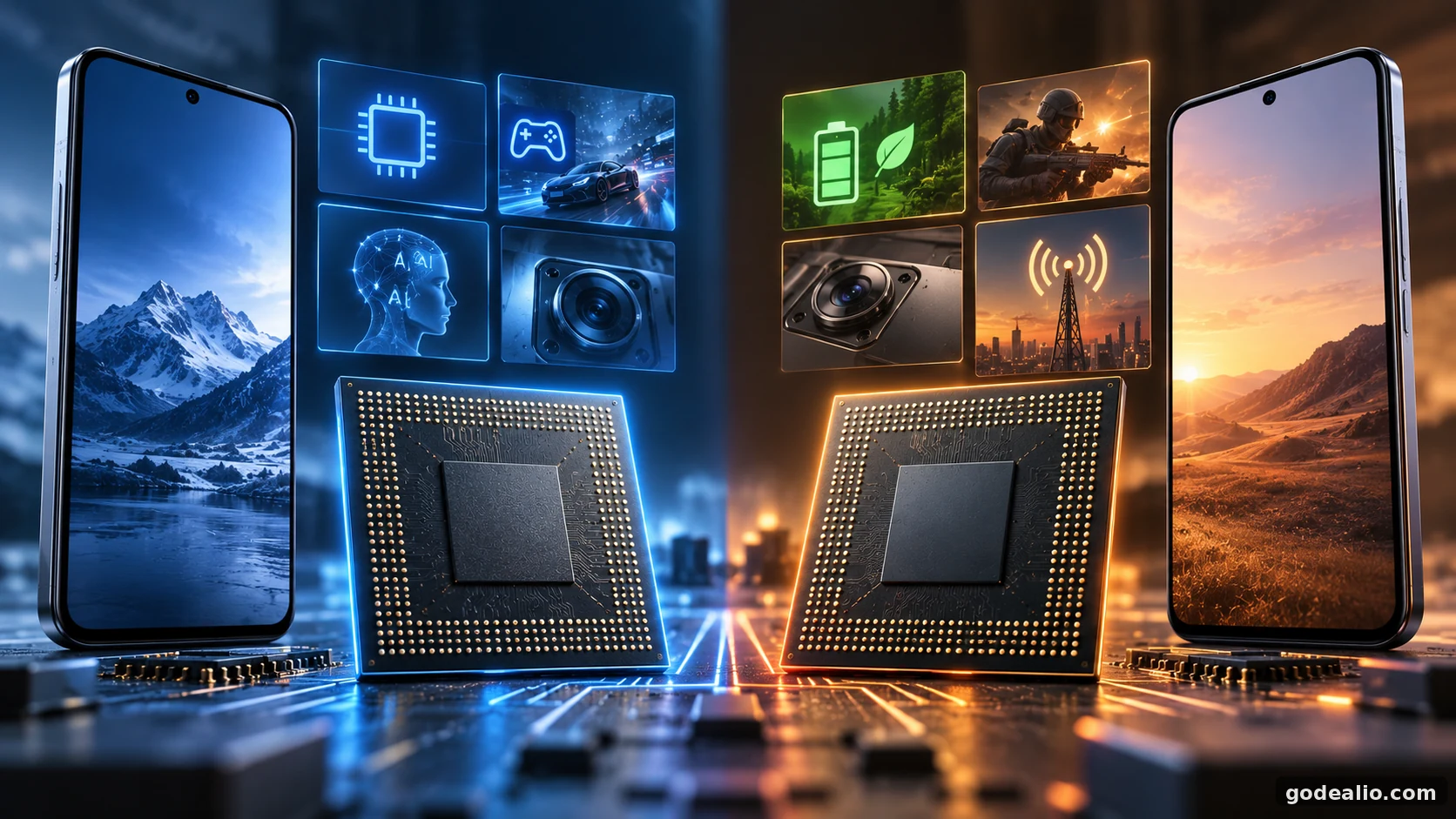
Snapdragon 8 Elite Gen 5 and Dimensity 9500 are flagship Android processors. This guide compares their CPU, GPU, gaming, efficiency, AI, camera and connectivity capabilities, and explains what Indian buyers should verify before choosing a phone.
Quick Verdict
Main rule: Compare the exact smartphones, not just the chip names: Snapdragon 8 Elite Gen 5 has a higher documented maximum CPU clock, while Dimensity 9500 makes strong efficiency and sustained-experience claims, but a universal real-world winner requires comparable phone-level testing.
Best for: Buyers who want to understand which platform capabilities matter before comparing flagship phones in India.
Guide Overview
- Guide type
- explainer
- Difficulty
- beginner
- Market
- India
- Time required
- About 20–30 minutes to compare two exact phones when official specifications and comparable tests are available.
- Cost estimate
- No fixed cost estimate; verify current India pricing for the exact phones and configurations.
Who this guide is for
Indian buyers comparing flagship Android phones powered by Snapdragon 8 Elite Gen 5 or MediaTek Dimensity 9500.
Before You Start
Requirements
- Exact smartphone model and regional variant
- Official processor and smartphone specifications
- Comparable exact-device performance tests
- Comparable sustained gaming and thermal tests
- Phone-level battery, camera and connectivity evidence
Prerequisites
- Do not treat manufacturer generational claims as direct cross-brand benchmark results.
- Use the same benchmark generation and broadly comparable test conditions when comparing scores.
- Remember that cooling, software, memory, storage, display and power limits can materially change phone-level results.
Tools Needed
- Official Qualcomm Snapdragon 8 Elite Gen 5 specifications
- Official MediaTek Dimensity 9500 specifications
- Official specifications for the exact phones being compared
- Comparable independent exact-device tests where available
Step-by-Step Guide
Follow the relevant steps in order and avoid changing unrelated advanced settings.
Confirm the exact phone and processor variant
- Verify that each shortlisted phone actually uses Snapdragon 8 Elite Gen 5 or Dimensity 9500.
- Check the phone maker's regional specification because platform implementation can vary.
Expected result
You have two exact phone-and-chip combinations rather than a brand-level comparison.
Warning
Qualcomm documents more than one Snapdragon 8 Elite Gen 5 CPU/platform configuration, so verify the OEM specification.
Platform: Android
Compare CPU capability correctly
- Check architecture and maximum clock information from official documentation.
- Use comparable single-core and multi-core tests for the exact phones when numerical performance matters.
Expected result
CPU conclusions are tied to comparable evidence rather than clock speed alone.
Warning
Higher clock speed by itself does not prove a proportional real-world performance advantage.
Platform: Android
Check GPU and sustained gaming
- Compare the exact phone's frame rate, frame-time stability and graphics settings in games you care about.
- Look at longer sessions rather than only short peak tests.
Expected result
Gaming performance is judged from the finished phone under sustained load.
Warning
Platform gaming features do not guarantee that every game or phone uses them.
Platform: Android
Separate efficiency from battery life
- Treat Qualcomm and MediaTek efficiency percentages as vendor-reported generational comparisons.
- Use complete-phone battery testing when judging endurance.
Expected result
You avoid confusing processor efficiency claims with complete-device battery life.
Warning
Display, battery capacity, radios, software and thermal policy also affect endurance.
Platform: Android
Evaluate AI features at device level
- Confirm the AI features actually enabled by the phone maker.
- Judge useful applications rather than relying on an unsupported cross-vendor TOPS comparison.
Expected result
AI capability is connected to features you can actually use.
Warning
The supplied research's numerical NPU TOPS comparison is not retained because the official pages used here do not provide a directly comparable cross-vendor TOPS basis.
Platform: Android
Compare cameras using real output
- Use chipset imaging specifications to understand supported capabilities.
- Use exact-phone photographs and video tests to judge final camera quality.
Expected result
Camera quality is not inferred from ISP branding alone.
Platform: Android
Verify connectivity on the Indian phone variant
- Check supported 5G bands and the wireless implementation of the exact phone.
- Treat chipset peak rates as platform capabilities rather than expected everyday speeds.
Expected result
Connectivity conclusions reflect the phone you can buy and the networks you use.
Warning
Network speed depends on the phone implementation, carrier, spectrum, coverage and network conditions.
Platform: Android
Choose between the complete phones
- Compare current India price, display, cameras, battery, charging, RAM, storage, cooling and update policy.
- Use the processor comparison as one part of the final decision.
Expected result
The buying decision reflects the complete device rather than a chipset label.
Platform: Android
Quick answer: Snapdragon 8 Elite Gen 5 or Dimensity 9500?
There is not enough comparable exact-device evidence in the supplied research to name one processor the universal better choice. Snapdragon 8 Elite Gen 5 has a higher documented maximum CPU clock, while Dimensity 9500 combines an All Big Core CPU with a flagship Arm GPU and makes strong manufacturer claims around performance efficiency. Those facts are useful, but they are not a substitute for testing finished smartphones.
If your priority is peak CPU capability, Snapdragon's official specification is notable. If sustained gaming, thermals or battery life matter more, compare the actual phones because cooling, software and power limits can change the result. The same rule applies to cameras and AI: chipset capabilities create possibilities, while the smartphone maker determines much of the experience you actually receive.
Who should use this comparison?
This guide is for Indian buyers choosing between flagship Android phones built around Snapdragon 8 Elite Gen 5 and Dimensity 9500. It is particularly useful when two phones are close in price and you want to know whether the processor should influence your decision.
It is not a phone review and does not assume that every device using the same chipset performs identically. A gaming phone with a larger cooling system may behave differently from a thin camera-focused flagship using the same platform. RAM, storage, display resolution, battery capacity and manufacturer software can also affect performance and endurance. The goal is therefore to explain the verified platform differences and show which phone-level evidence you should check before buying.
CPU design: two different flagship approaches
Qualcomm's Snapdragon 8 Elite Gen 5 uses its third-generation Oryon CPU. Qualcomm lists a maximum CPU speed of up to 4.74 GHz, while also noting that the platform is available in other CPU configurations and that buyers should consult OEM specifications. That qualification matters because the chip name alone does not guarantee that every phone exposes the same maximum CPU setup.
MediaTek's Dimensity 9500 uses a third-generation All Big Core design with one C1-Ultra core, three C1-Premium cores and four C1-Pro cores. MediaTek lists the C1-Ultra at 4.21 GHz on its detailed platform page. A simple clock comparison still cannot tell you the complete performance story: architecture, cache, memory behaviour, thermal limits and workload all matter. Use comparable exact-device CPU tests when the size of the real performance difference matters to your purchase.
What about AnTuTu and Geekbench claims?
The supplied research includes approximate AnTuTu figures and states that Snapdragon leads Geekbench. Those numerical claims should not be published as established facts here because no traceable source, exact phone configuration, benchmark version or comparable test conditions were supplied with them. Benchmark results can change with device implementation, software, thermal state and performance mode.
A better method is to compare results produced with the same benchmark generation on the exact phones you are considering. Read CPU-oriented tests separately from broader system or graphics tests, and do not treat a short synthetic run as proof of sustained gaming. Benchmarks are useful evidence when methodology is comparable; they become misleading when numbers collected under different conditions are placed side by side without qualification.
GPU and gaming: judge the phone, not only the GPU name
Snapdragon 8 Elite Gen 5 uses Qualcomm Adreno graphics. Qualcomm reports generational improvements in graphics performance, power efficiency and ray tracing, but those percentages compare with its own previous generation. Dimensity 9500 uses the Arm Mali-G1 Ultra MC12. MediaTek similarly reports generational gains in peak GPU performance, power efficiency and ray-tracing performance relative to its previous flagship.
These vendor claims demonstrate that both platforms target demanding flagship gaming; they do not form a controlled cross-brand test. For an actual buying decision, check sustained frame rate, frame-time consistency, graphics settings, power use and temperature on the exact phones. Also check the games you play, because game engines, drivers and manufacturer optimisation can affect results. A short peak benchmark may miss the behaviour that appears after twenty or thirty minutes of continuous play.
Efficiency and thermals: why the supplied winner claim needs caution
The research brief describes Dimensity 9500 as better for sustained efficiency and thermal control, but that conclusion needs comparable phone-level testing. MediaTek says the Dimensity 9500 uses TSMC N3P and highlights reduced power use and improved efficiency in its own generational measurements. Qualcomm also reports improved CPU and GPU power efficiency plus overall SoC power savings for Snapdragon 8 Elite Gen 5 compared with its predecessor.
Neither set of manufacturer figures establishes which finished phone will run cooler. Smartphone makers choose chassis materials, cooling systems, performance limits and software policies. Ambient temperature and workload also matter. A well-cooled Snapdragon phone may sustain performance differently from a thin Dimensity phone, and the reverse can also be true. For thermal-sensitive buyers, sustained exact-device tests are more useful than a processor-brand rule.
Battery life cannot be decided from processor efficiency alone
Efficiency is important, but the processor is only one contributor to smartphone endurance. Display size, resolution, refresh behaviour, battery capacity, modem conditions, camera use, background applications and the phone maker's power management can all affect how long a device lasts. Two phones with different chipsets can therefore reverse expectations created by processor-level efficiency claims.
When comparing Snapdragon 8 Elite Gen 5 and Dimensity 9500 phones, use battery tests that exercise comparable workloads and clearly identify the devices and settings. Pay attention to the activities that matter to you, such as gaming, video, navigation or mixed daily use. Manufacturer processor claims can explain why a platform may be more efficient than its own predecessor, but complete-phone endurance is the evidence that should guide a battery-focused purchase.
AI: Hexagon versus NPU 990 needs feature-level comparison
Snapdragon 8 Elite Gen 5 includes Qualcomm's Hexagon NPU and AI Engine, while Dimensity 9500 includes MediaTek's NPU 990 and second-generation Gen-AI Engine. Both companies position their platforms for on-device generative and agentic AI. MediaTek also describes a super-efficient CIM-based NPU, while Qualcomm highlights new AI accelerators and supported precision formats.
The supplied brief gives TOPS ranges for the two platforms, but those figures are not used as a direct comparison because the official material reviewed here does not provide a common cross-vendor TOPS methodology. For buyers, a more practical question is which AI features the exact phone supports, whether they run locally or require cloud processing, and whether those features are useful to you. Hardware capability matters only when software exposes it effectively.
Camera and video capabilities depend heavily on the phone maker
Qualcomm equips Snapdragon 8 Elite Gen 5 with Spectra imaging technology and promotes advanced professional-video capabilities. MediaTek's Dimensity 9500 uses the Imagiq 1190 imaging system and lists advanced video and focus capabilities. These are significant platform features, but neither chipset can guarantee better photographs or video on its own.
The final camera system depends on sensor selection, lenses, stabilisation, image-processing algorithms, colour tuning, exposure decisions and the features enabled by the manufacturer. A phone maker can also choose not to implement every capability supported by the chipset. Camera-focused buyers should therefore verify the required recording modes and then compare real photos and videos from the exact smartphones. Treat ISP specifications as the capability layer, not the final camera-quality verdict.
5G and Wi-Fi: platform maximums are not everyday speeds
Snapdragon 8 Elite Gen 5 integrates Qualcomm's X85 5G Modem-RF system and FastConnect 7900 connectivity platform. Qualcomm lists support for both sub-6 GHz and mmWave capabilities at the platform level. Dimensity 9500 integrates a Release 17 5G modem focused on sub-6 GHz connectivity and lists Wi-Fi 7 support with a peak data rate of up to 7.3 Gbps.
Those specifications should not be read as speed-test predictions. The smartphone manufacturer determines antennas and enabled bands, while the mobile carrier, spectrum, signal quality and congestion influence real network performance. For India, check the exact phone variant's supported bands and your operator's network rather than buying from a modem peak-speed number. The same principle applies to Wi-Fi: router capability, channel conditions and the phone implementation affect actual throughput.
Memory and storage can change the complete experience
Dimensity 9500 officially supports LPDDR5X memory and four-lane UFS 4.1 storage at the platform level, with MediaTek highlighting storage throughput improvements. Snapdragon 8 Elite Gen 5 also targets premium smartphone configurations, but buyers should verify the memory and storage technologies implemented by the exact handset rather than assuming platform maximums are always used.
This matters because application loading, large-file transfers, multitasking and game data access involve more than CPU peak speed. Capacity matters too. A phone with more usable storage or memory may be the more practical purchase even when another model has a processor advantage in a particular test. Compare the configuration attached to the actual Indian selling price, especially when manufacturers offer several RAM and storage variants under the same model name.
Sustained performance matters more than one peak run
Flagship processors can deliver high short-duration performance, but smartphones operate within strict power and temperature limits. During longer gaming, video processing or other intensive workloads, the device may change CPU or GPU behaviour to control heat and power. That makes sustained performance a property of the processor, cooling system and software working together.
When reviewing tests, look for performance over time rather than only the first run. For gaming, frame-time stability can reveal behaviour that an average frame-rate figure hides. Also note whether a review uses an external cooler or special performance mode, because that may not represent normal use. The supplied brief's statement that Dimensity 9500 maintains performance longer should therefore remain a hypothesis until comparable Snapdragon and Dimensity phones are tested under the same sustained workload.
Which platform should different buyers prioritise?
Buyers focused on peak CPU capability can give Snapdragon 8 Elite Gen 5 particular attention because Qualcomm documents a higher maximum CPU clock than MediaTek lists for Dimensity 9500, while still checking exact-device benchmarks. Competitive gamers should move beyond that specification and compare sustained GPU behaviour, cooling and game-specific results. Battery-focused users should compare complete-device endurance rather than chipset efficiency claims alone.
For camera users, the better choice is the phone with stronger verified image and video output, regardless of processor brand. AI-focused buyers should compare the actual on-device features exposed by each manufacturer. Connectivity-focused buyers should verify Indian bands and phone implementation. These rules may lead different users to different phones, which is more useful than forcing one processor to be the answer for every workload.
Final buying method for Indian flagship-phone shoppers
First shortlist the actual Snapdragon 8 Elite Gen 5 and Dimensity 9500 phones available within your budget. Confirm the exact Indian variant, RAM and storage. Next compare CPU and GPU evidence collected under similar conditions. Add sustained gaming and thermal testing if you use demanding games or long workloads. Then compare complete-phone battery tests, camera samples, connectivity support and the manufacturer's software-update policy.
Finally, verify current India pricing before deciding value. A discount, storage upgrade or better camera package can make one phone more attractive even when the competing processor has an advantage in a particular test. Snapdragon 8 Elite Gen 5 and Dimensity 9500 are both flagship-class platforms; the sensible purchase is the phone whose complete strengths align with your workload, ownership period and current price.
Troubleshooting
Different reviews show different benchmark results
Likely causes
- Different smartphone implementations
- Different benchmark versions
- Different software or performance modes
- Different thermal state or ambient conditions
What to try
- Compare the same benchmark version and similar phone configurations.
- Prefer reviews that disclose test conditions.
- Use several comparable tests rather than one result.
When to escalate: Treat the numerical comparison as inconclusive when the methodology or device configuration is unclear.
A phone scores highly but slows during long gaming sessions
Likely causes
- Thermal limits
- Power management
- Cooling design
- Game-specific optimisation
What to try
- Check sustained frame-rate and frame-time testing.
- Compare temperatures and performance over a longer session.
- Check whether the test used a special performance mode.
When to escalate: Follow the phone manufacturer's support guidance if the device shows abnormal thermal warnings, instability or shutdowns.
The faster phone has shorter battery life
Likely causes
- Display power consumption
- Battery capacity
- Radio conditions
- Software behaviour
- Different performance limits
What to try
- Use complete-phone endurance tests.
- Separate chipset efficiency claims from overall device endurance.
When to escalate: Do not attribute the difference to the processor alone without comparable device-level evidence.
Buying & Decision Checklist
- Confirm the exact chipset and phone variant.
- Verify CPU configuration from official specifications.
- Use comparable benchmark versions.
- Check sustained gaming rather than only peak scores.
- Check phone-level thermals.
- Use complete-device battery tests.
- Inspect real camera samples and video.
- Confirm Indian 5G and wireless implementation.
- Check RAM and storage configuration.
- Check software-update policy.
- Verify current India pricing.
- Choose the complete phone rather than the processor badge.
Common Mistakes
- Declaring a winner from maximum CPU clock speed alone.
- Using unverified AnTuTu or Geekbench figures from different devices or benchmark versions.
- Treating vendor generational percentage claims as direct Snapdragon-versus-Dimensity measurements.
- Assuming a processor's peak performance establishes sustained gaming performance.
- Assuming processor efficiency establishes complete-phone battery life.
- Comparing AI processors using unsupported TOPS numbers from different methodologies.
- Assuming modem peak speed equals real-world Indian network speed.
- Ignoring cooling, software, RAM, storage and the phone maker's power policy.
Key Takeaways
- Snapdragon 8 Elite Gen 5 has a documented maximum CPU clock up to 4.74 GHz, with Qualcomm also listing other platform configurations.
- Dimensity 9500 uses an eight-core third-generation All Big Core design with C1-Ultra, C1-Premium and C1-Pro CPU cores.
- Both platforms support advanced flagship graphics, AI, imaging and connectivity capabilities.
- Manufacturer generational performance and efficiency claims are not direct cross-brand test results.
- Sustained gaming, thermals, battery life and camera quality require exact-phone evidence.
- There is not enough comparable evidence in the supplied brief to declare a universal real-world winner.
Important Warnings
- Do not publish the supplied 4.03-million versus 3.56-million AnTuTu comparison without a traceable, comparable source and test methodology.
- Do not publish the supplied claim that Snapdragon universally leads Geekbench without comparable exact-device evidence.
- Do not claim Dimensity 9500 universally runs cooler or throttles less without comparable exact-phone sustained tests.
- Do not publish the supplied 70–85 TOPS versus 100 TOPS AI comparison as a direct cross-vendor measurement without a common methodology.
- Do not assume every Snapdragon 8 Elite Gen 5 phone uses the same maximum CPU configuration.
- Do not treat chipset modem or Wi-Fi peak rates as guaranteed real-world speeds.
Useful Tips
- For gaming, prioritise sustained frame-time stability over one peak benchmark.
- For battery-focused buying, use complete-phone endurance tests.
- For AI, check which on-device features the manufacturer actually enables.
- For cameras, compare output from the exact phone rather than ISP specifications alone.
- When chipset performance is close, display, battery, cameras, storage and software support can matter more.
Conclusion
Snapdragon 8 Elite Gen 5 and Dimensity 9500 are both advanced flagship platforms. Official specifications show meaningful differences in CPU design, graphics, AI, imaging and connectivity, but they do not establish a universal winner for every smartphone. For Indian buyers, the reliable approach is to compare exact phones under comparable conditions and then factor in battery, cameras, cooling, storage, software support and current price.
Frequently Asked Questions
Is Snapdragon 8 Elite Gen 5 faster than Dimensity 9500?
Qualcomm documents a higher maximum CPU clock for Snapdragon 8 Elite Gen 5, but that alone does not establish a universal performance win. Use comparable exact-device CPU, GPU and sustained tests for the phones you are considering.
Which is better for gaming, Snapdragon 8 Elite Gen 5 or Dimensity 9500?
Both platforms have flagship gaming capabilities. The better gaming phone depends on the exact GPU implementation, cooling, power limits, software and game optimisation, so sustained exact-device testing is required.
Does Dimensity 9500 run cooler than Snapdragon 8 Elite Gen 5?
That cannot be concluded universally from the supplied evidence. Thermal behaviour depends heavily on the finished phone's cooling, chassis and power policy as well as the processor.
Which processor gives better battery life?
Processor efficiency is only one factor. Compare complete-phone battery tests because display power, battery capacity, radios, software and performance limits also affect endurance.
Which is better for AI?
Both platforms include advanced dedicated AI hardware. A useful buying comparison should focus on the AI features implemented by the exact phones rather than unsupported cross-vendor TOPS numbers.
Which is better for cameras?
Neither chipset guarantees better camera quality by itself. Sensor choice, lenses, stabilisation and manufacturer image processing strongly influence the result, so compare exact-phone photo and video output.
Should I trust AnTuTu scores when choosing between them?
Use AnTuTu only when the benchmark version, devices and test conditions are sufficiently comparable. One synthetic score should not replace sustained gaming, battery, camera and complete-device evaluation.
What should Indian buyers check before choosing?
Check the exact Indian phone variant, current price, RAM and storage, sustained performance, battery life, cameras, supported network bands, software updates and warranty or service considerations relevant to the phone.
Recommended Deals
Related Reading on Godealio
More Guide Details
Featured
false